
Now Baby 90-Day Nutrition Protocol for Low AMH
You have been told your egg reserve is low. Before you hand your power to an IVF clinic—or accept that donor eggs may be your only option—there is more you need to know about what your AMH result does not measure.
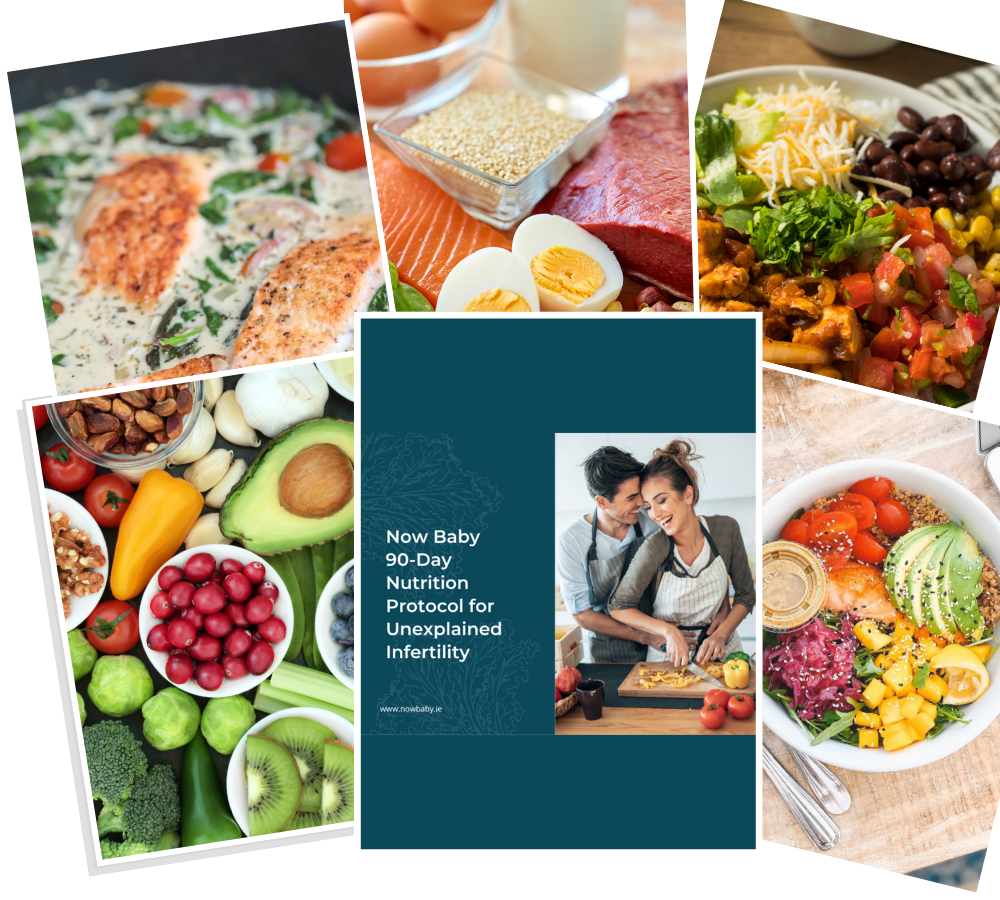
Now Baby 90-Day Nutrition Protocol for Low AMH
€97 — immediate access
Decide within 7 days of purchase. If the protocol isn’t right for you, email us for a full refund.
- No calorie counting.
- No macro tracking.
- No restrictive dieting
- No special equipment.
When You Have Been Told…
Your AMH result measures the follicles producing AMH at the time of testing. It does not measure the development or competency of the eggs within them.
This protocol puts you back in charge with a precise 90-day nutrition plan for the eggs you are developing and your partner’s sperm.
What Low AMH Does — and Does Not — Mean for Your Fertility
AMH is a hormone. It can go up as well as down and it does decline naturally with age.
It is produced by follicles currently maturing eggs for ovulation.
Dormant follicles—your ovarian reserve—do not produce AMH.
Low AMH does not measure the eggs developing within those follicles or explain why you have not conceived.
The eggs you may ovulate over the next 90 days are already developing. What you do to support that development—and your partner’s sperm—begins now.
Your Menstrual Cycle Is Not Your Fertility Cycle
Built by a Functional Fertility Practitioner
This nutrition protocol was designed by me, Claire Burrows, accredited nutrition and lifestyle practitioner and founder of Now Baby, with over 20,000 hours of experience supporting couples navigating fertility challenges.
I have seen too many women clutch at the IVF straw without understanding its limitations for low AMH.
Supporting the cellular environment of egg and sperm development is the most purposeful next step available to you. This protocol was built precisely for that purpose.
Every recipe is structured around defined fertility nutrient targets, blood sugar stability, and the 90-day developmental cycle that shapes egg and sperm health — translated into a clear, practical format you can start today.

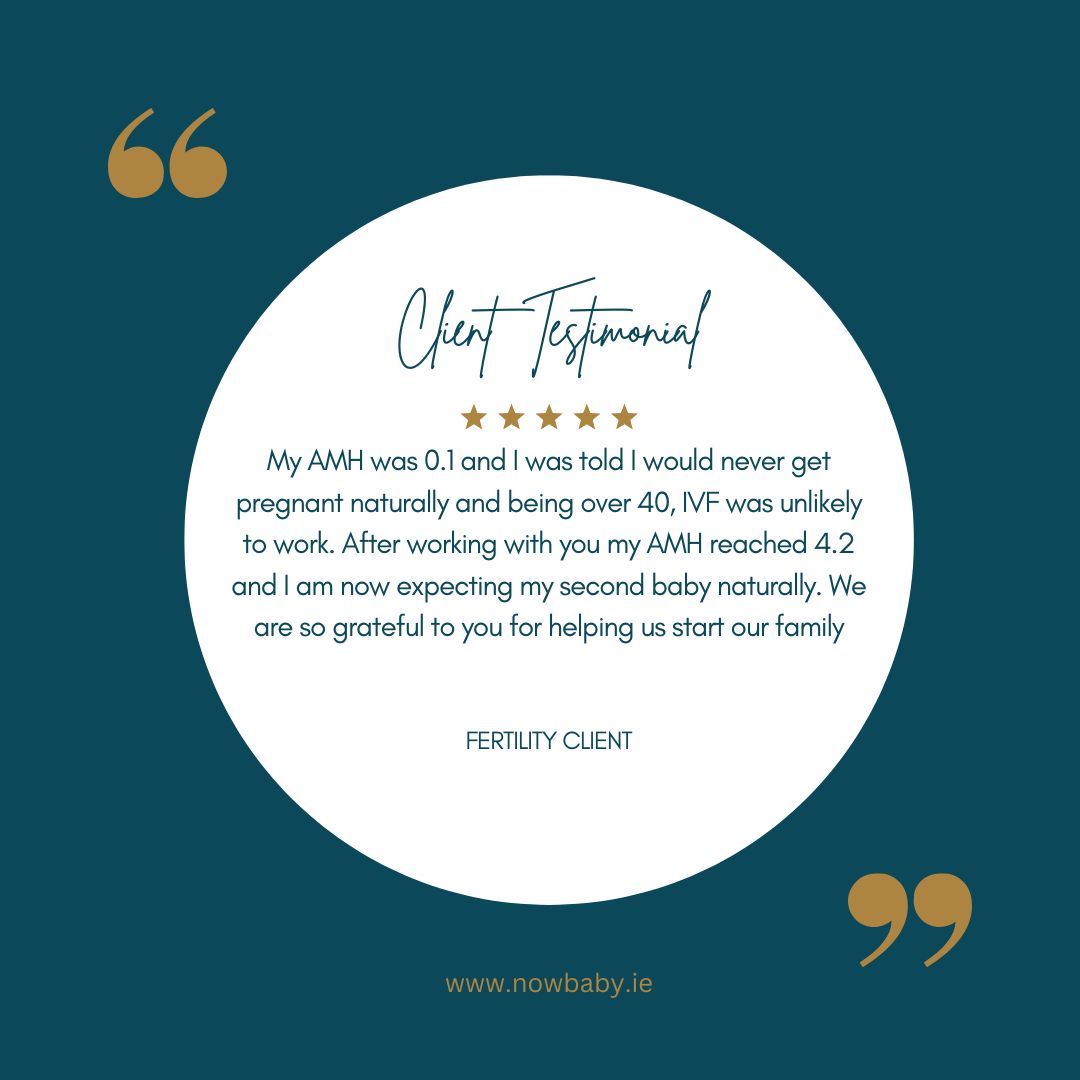
Single mum by choice with low AMH
Making the decision to become a single mum by choice is huge. Then to be faced with a low AMH diagnosis, followed by IUI and IVF failure, the road gets even bumpier.
That is where Susan found herself at age 37. She had made her decision but felt everything was stacking against her.
The Now Baby Nutrition Protocol for Low AMH made sense for her. She needed medical intervention but also understood it has its limitations.
She started the plan in June and by August she had 3 eggs retrieved, 2 fertilized and were transferred. Her pregnancy test was positive and her scan confirmed a single baby onboard.
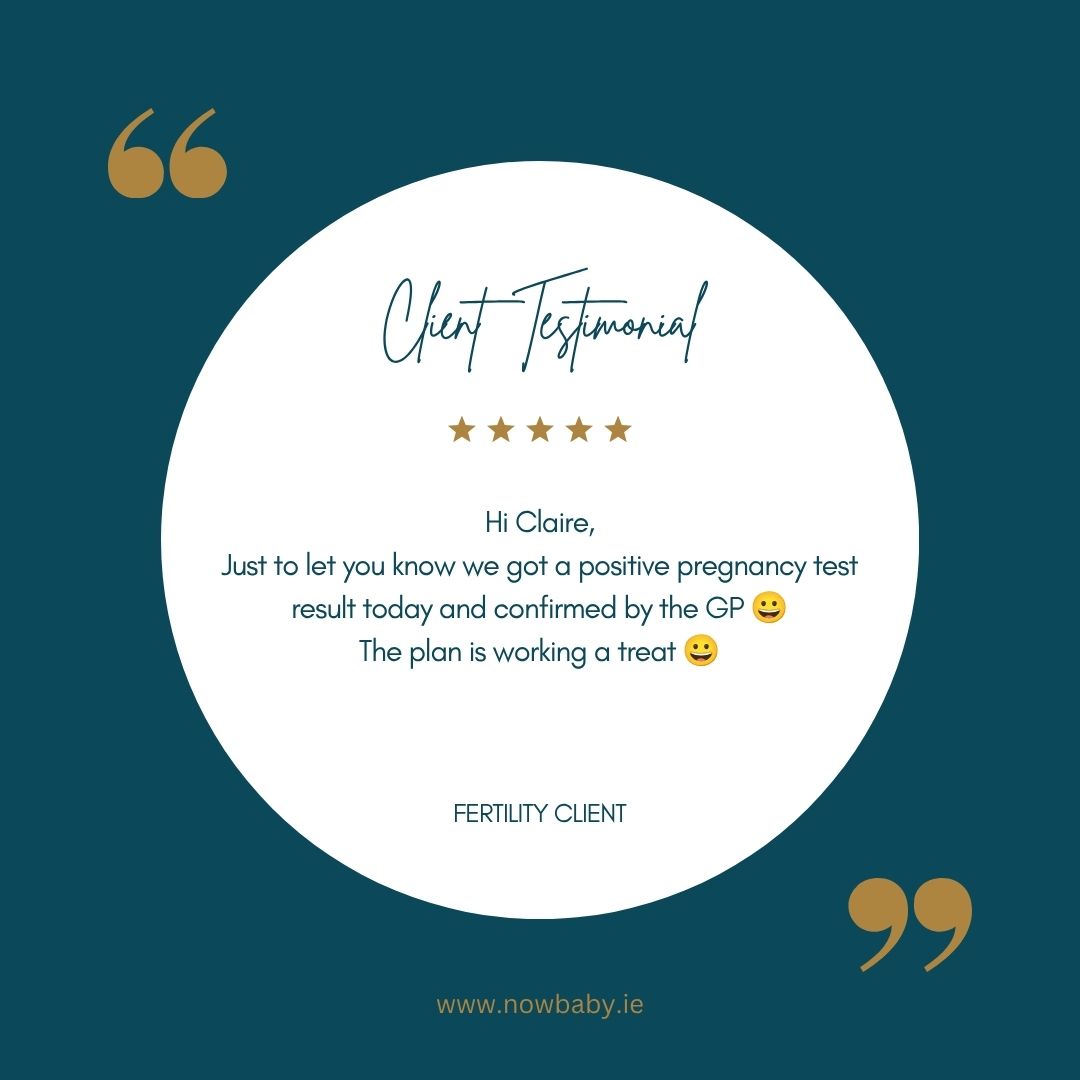
Low AMH, high FSH and adamant she wasn't doing IVF again
This 39 year old mama had done multiple rounds of IUI and IVF and had one baby as a result with no frozen embryos left. The pregnancy was complicated and baby girl was born early as a result. Despite her desire to grow her family she felt IVF was not the way for her to do it.
Despite her low AMH and high FSH, her menstrual cycle was regular and she was ovulating. Her weight was good but she knew her diet was poor.
Her partner worked long days, skipped meals and ate late. Despite them both following the protocol diligently she felt she was too old and it was never going to happen. Her 40th birthday brought the surprise she had dreamed of – her BFP!
2 babies over 40 despite low AMH
AMH of 0.9ng/mL is considered low and this mama was already 40 and trying for her first baby.
They got off to a bit of a slow start, which is fine. Nutrition changes which are sustainable are more likely to succeed. They followed to protocol as best they could and conceived their first baby after 6 months and welcomed their second when mama was 43.

Designed Around Fertility Physiology
Every meal is structured to support egg and sperm development, metabolic stability and reproductive hormone signalling in real life.
- Dairy free Reduce inflammatory load and optimise mineral balance during follicular and sperm development.
- Added Sugar free Protect insulin signalling and downstream reproductive hormones.
- Caffeine conscious Reduce unnecessary stress load on adrenal and reproductive pathways.
- High fibre Support microbiome diversity for embryo implantation support.
- Nutrient dense Designed around defined fertility nutrient targets for both partners.
- Blood sugar balancing Stabilise metabolic input that influences ovulation, sperm quality and implantation environment.
This is where structured fertility nutrition changes the equation.
€97 instant access
What You’ll Receive
Structured Beyond Ovulation
Ovulation is not the finish line.
Implantation requires adequate folate status, iron regulation, zinc, iodine, selenium, vitamin D and vascular support.
Early embryonic development increases demand again.
This plan is structured to support:
• Endometrial receptivity
• Vascular development
• Hormone signalling stability
• Early neural and organ development nutrient demands
You are not just preparing an egg.
You are preparing an environment.
As you make progress, you may notice
- More stable energy through the day, with fewer afternoon slumps.
- Feeling more alert.
- Less menstrual discomfort, where present.
- Reduced waist circumference — larger waist measurements are linked to more visceral fat and a greater likelihood of erectile dysfunction in men.
- Greater confidence about what to eat — and why.
- A renewed sense of purpose and hope.
Practical Questions
What if I have allergies or dietary restrictions?
Are the ingredients easy to find?
The plan uses normal supermarket ingredients.
No specialty fertility foods.
No obscure health-shop hunting.
The precision is in how the foods are combined — not in exotic sourcing.
Will this fit around a busy life?
The plan is built for real lives.
Batch-friendly meals.
Leftovers that carry forward nutrient density.
Structured repetition that reduces decision fatigue.
You are not meant to spend hours in the kitchen.
You are meant to support egg and sperm development efficiently.
Trying to conceive already takes energy.
The plan protects it.
What if there is something I don't like?
You do not need to love every ingredient.
The meals are structured around nutrient intent — iron, choline, omega-3s, iodine, zinc, blood sugar stability.
The simplest way to manage it is to swap a like for like meal rather than swapping a single ingredient, i.e. fish for fish.
This is not a diet you “stick to.”
It is a blueprint you apply.