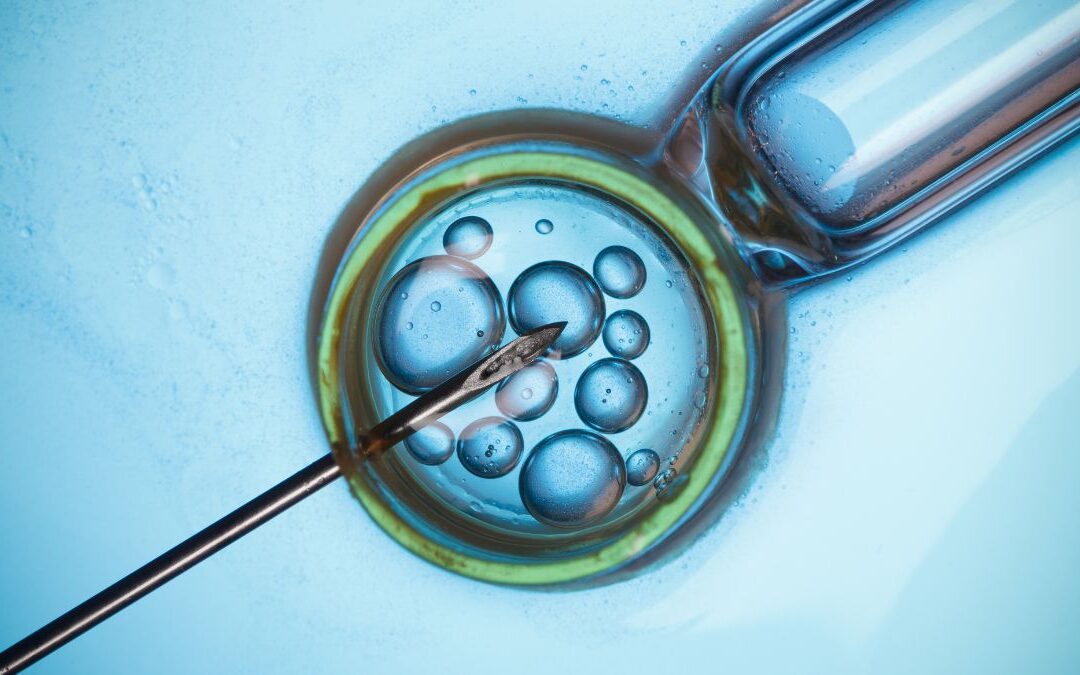
Your embryo is ready for transfer. And your clinic has suggested assisted hatching — a brief laboratory procedure performed on your embryo before it is placed in the uterus.
The idea behind it is straightforward. Your embryo is surrounded by a protective outer shell called the zona pellucida. To implant, it must break free from that shell — a process called hatching. Assisted hatching creates a small opening in the zona to help that process along.
The Human Fertilisation and Embryology Authority, the UK’s independent fertility regulator, formally assesses the add-ons offered alongside standard IVF. Their evidence reviews are used internationally by clinicians and patients trying to understand what the research actually shows.
Assisted hatching is on that list.
Why an embryo might need help hatching
In a natural conception, the zona pellucida softens and ruptures as the embryo grows. In IVF, several factors can make this harder than it should be.
The in vitro culture environment can cause the zona to harden through changes in its protein structure — making it less likely to rupture on its own. Freezing and thawing can affect zona integrity in a similar way, sometimes leaving it thicker or less flexible than it would be in a fresh cycle. Maternal age is also a factor — older eggs tend to produce embryos with a thicker zona pellucida, which can make natural hatching more difficult. And embryos graded with high fragmentation or slower than expected development may also have zona characteristics that make hatching harder.
If any of these apply to your cycle, assisted hatching is being offered for a specific biological reason — not as a routine upgrade.
What the procedure involves
Assisted hatching is performed in the laboratory on the day of transfer, or occasionally a few days before. The timing depends on your cycle — it can be performed on a day 3 embryo at the 6-8 cell stage, on a day 5 blastocyst, or on a frozen-thawed embryo before transfer. The clinical rationale is slightly different at each stage: on day 3, the concern is zona hardening from the culture environment; at blastocyst stage, it is used when your embryo shows signs of delayed or incomplete natural hatching; in frozen cycles, cryopreservation effects on the zona are the primary reason.
Using a precisely controlled laser, the embryologist creates a small opening in the zona pellucida. Your embryo is then returned to culture until transfer. The procedure takes a matter of minutes and does not involve any intervention on your part.
What the regulator assessment shows
The HFEA reviews each add-on against the evidence for whether it improves the chance of a live birth.
The HFEA assessment reflects genuine uncertainty. The Cochrane review of 39 randomised controlled trials involving over 7,200 women found that assisted hatching may slightly improve clinical pregnancy rates — but the evidence for improvement in live birth rates is uncertain. If the live birth rate without assisted hatching is around 28%, the rate with it falls somewhere between 27% and 34% — a range that includes no improvement at all.
There is also a finding the conversation does not always include. The Cochrane review also found a slight increase in multiple pregnancy risk — twins or higher order multiples — without a corresponding confirmed increase in live birth rates. Multiple pregnancy carries its own clinical risks, and this is worth raising with your consultant if it has not been discussed.
The clinical situations where assisted hatching may have a stronger case are specific:
- Older maternal age, where thicker zona pellucida is more common
- Frozen embryo transfer cycles, where cryopreservation may have affected zona integrity
- Embryos graded with high fragmentation or slow development
- Previous IVF cycles where good-quality embryos failed to implant
If your situation matches one of those, the rationale for assisted hatching in your cycle is clearer. If it was offered without that specific clinical picture behind it, the assessment is useful information to bring into the conversation with your clinic.
The regulator’s work is designed to inform that conversation, not replace it.
What hatching alone cannot do
Assisted hatching gets your embryo out of its shell. But if it is struggling to hatch, there may be other factors to consider.
Where hatching is delayed or incomplete, it can indicate that your embryo’s own energy reserves — its mitochondrial capacity — are under pressure. Hatching requires your embryo to expand, generate internal pressure and rupture the zona. If that process stalls, it is often a signal about the metabolic state of the embryo, not just the thickness of its shell. Assisted hatching can open the door mechanically. It cannot supply the energy your embryo needs to complete what follows.
Egg quality determines mitochondrial function in the embryo — and egg quality responds to nutritional and lifestyle inputs in the 90 days before egg collection.
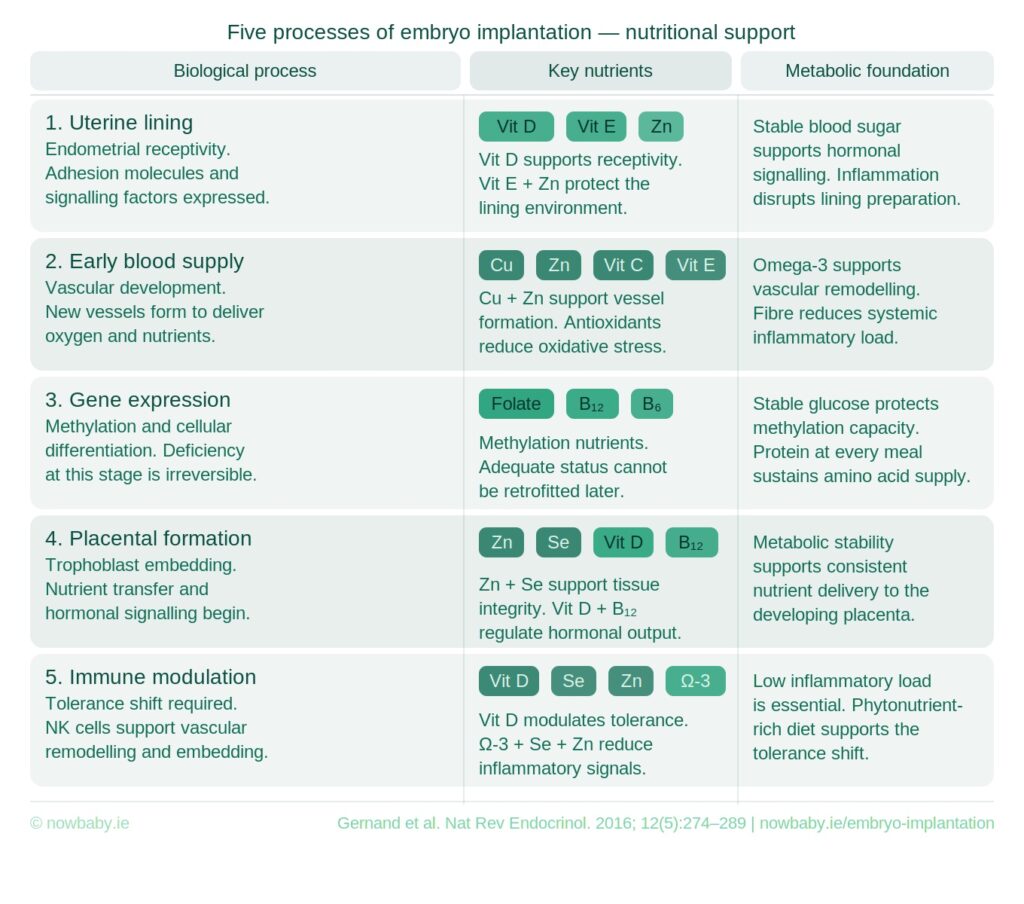
When your embryo attaches, the next step is to embed — establishing the first physical relationship with the maternal blood supply. From there, early blood supply must follow to sustain it. Placental formation must begin. Immune modulation must shift to tolerate your embryo without rejecting it
Almost 2 in 3 frozen transfers do not result in a live birth. Embryo implantation has 5 distinct phases and each has its own nutrient requirements. Your embryo needs to complete uterine lining preparation, early blood supply, gene expression, placental formation and immune modulation — all before a reliable test result. Each of those phases responds to what the body has available to work with.
The Now Baby FET Implantation Meal Plan was designed around every one of those phases — the nutritional structure for the days your biology is doing its most demanding work. Professionally analysed. Beginning the day after transfer.
You didn’t come this far to wing it.