
Ovulation is often described as a single moment — an egg released, a window opened, a chance taken.
In reality, ovulation reflects how effectively your brain, ovaries, and wider endocrine and metabolic systems have been communicating across the 90-day fertility window that shapes egg development before ovulation occurs.
Ovulation is the end point of a process that begins much earlier, as a group of follicles start developing under hormonal signalling. One follicle is selected and continues maturing as the others regress. The quality of that maturation determines whether the egg released at ovulation is capable of fertilisation.
It is not something the body performs on command. It is something the body allows when conditions are in place.
Why Ovulation Kits Often Fail
Ovulation predictor kits detect a hormone surge, but that signal does not reflect the quality of egg development shaped across the 90-day fertility window.
In PCOS, luteinising hormone (LH) may remain elevated across the menstrual cycle, producing false positives or prolonged “high” readings. Under sustained stress, cortisol can disrupt reproductive hormone signalling and make ovulatory patterns less predictable. After fertility treatment, miscarriage, or long periods of cycle disruption, ovulatory patterns may shift or become less predictable.
Ovulation kits detect a hormone signal — not egg quality or endometrial readiness.
When ovulation becomes something to chase or catch, anxiety often rises. That stress response can itself disrupt the very physiology ovulation depends on.
For people with conditions such as PCOS, reliance on kits can create confusion rather than clarity.
“I’m Ovulating — So Why Am I Not Pregnant?”
Ovulation alone does not indicate fertility potential.
An egg can be released without having developed optimally. Hormonal support after ovulation can be shortened or disrupted. Inflammatory or immune factors can interfere with implantation even when ovulation is regular and well-timed.
This is why many people with consistent ovulation still experience difficulty conceiving — and why ovulation is not a reliable standalone marker of fertility.
This pattern is especially common in cases described as unexplained infertility, where ovulation is present but pregnancy does not follow.
The 90-Day Fertility Window
The egg released this month did not begin developing this month.
Egg and sperm development are shaped across approximately 90 days before conception. During this time, they are influenced by metabolic health, inflammatory load, oxidative stress, nutrient availability, and hormonal signalling.
The follicles that will go on to ovulate are already responding to these conditions well in advance of the menstrual cycle in which ovulation occurs.
The body is always responding to what came before.
Effective ovulation support looks upstream — not just at timing, but at the conditions shaping follicle development and egg maturation before ovulation is triggered.
The Fertility Trifecta
Ovulation is one component of fertility — not a measure of whether pregnancy will happen.
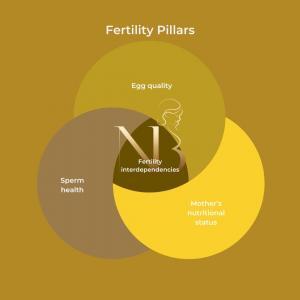
Successful pregnancy requires alignment between three independent but interrelated factors:
Egg quality and developmental competence
Sperm quality and DNA integrity
A receptive, appropriately timed uterine environment
Ovulation can occur regularly while one or more of these other conditions is sub-optimal.
This is why ovulation alone cannot predict fertility outcomes — and why timing intercourse around ovulation alone does not reliably resolve conception difficulties.
Why Supplements Can’t Override Physiology
No supplement can override chronic blood sugar dysregulation, sustained stress signalling, unresolved inflammation, inadequate energy intake, or disrupted circadian rhythm.
When supplements are used as the primary intervention, ovulation may still occur — but often without the underlying developmental progression required to support fertilisation and implantation.
At Now Baby supplements sit within a broader framework of essential nutrition, not as standalone solutions.
When Ovulation Support Actually Helps
Ovulation support is most effective when it improves the conditions ovulation responds to.
This includes stabilising blood sugar, reducing inflammatory load, supporting thyroid and adrenal balance, improving cellular energy availability, and aligning nutrition with recovery and circadian rhythm.
When these foundations are in place, follicle development progresses more effectively, and ovulation reflects that progression — not just the release of an egg.
If You’re Ovulating but Not Conceiving
If ovulation is present but pregnancy has not followed, ovulation is not the limiting factor.
The more useful question is what else may still need support within the fertility trifecta.
Ovulation does not operate in isolation.
The Fertility Focus Hour is designed to interpret your cycle in that wider physiological context — so what your body is doing can be understood accurately, rather than inferred from a single signal.