
A chemical pregnancy after IVF means implantation began but did not hold.
Your embryo initiated contact with the endometrial surface.
Early attachment activity started.
Pregnancy hormone became detectable.
But the biological progression required to sustain early pregnancy did not stabilise in that cycle.
A positive test may have suggested that pregnancy was taking hold.
Then falling hormone levels or bleeding showed that implantation strength was not continuing to build.
Understanding what happened physiologically helps clarify what determines whether early pregnancy stabilises in the two-week wait after transfer.
What chemical pregnancy means after embryo transfer
Implantation is a developing biological sequence rather than a single event.
After transfer, your embryo begins interacting with the uterine lining at a cellular level.
Attachment activity initiates.
Hormonal signalling begins to support early pregnancy formation.
Energy demand increases as developmental activity progresses.
In a chemical pregnancy, this early interaction starts but does not deepen into stable attachment.
Your body recognises implantation activity.
Human chorionic gonadotropin rises briefly.
But the strengthening phase of implantation does not continue building.
This reflects implantation that initiated but did not stabilise.
Why implantation may begin but not strengthen
Successful early pregnancy depends on synchronisation between embryo development and maternal physiology.
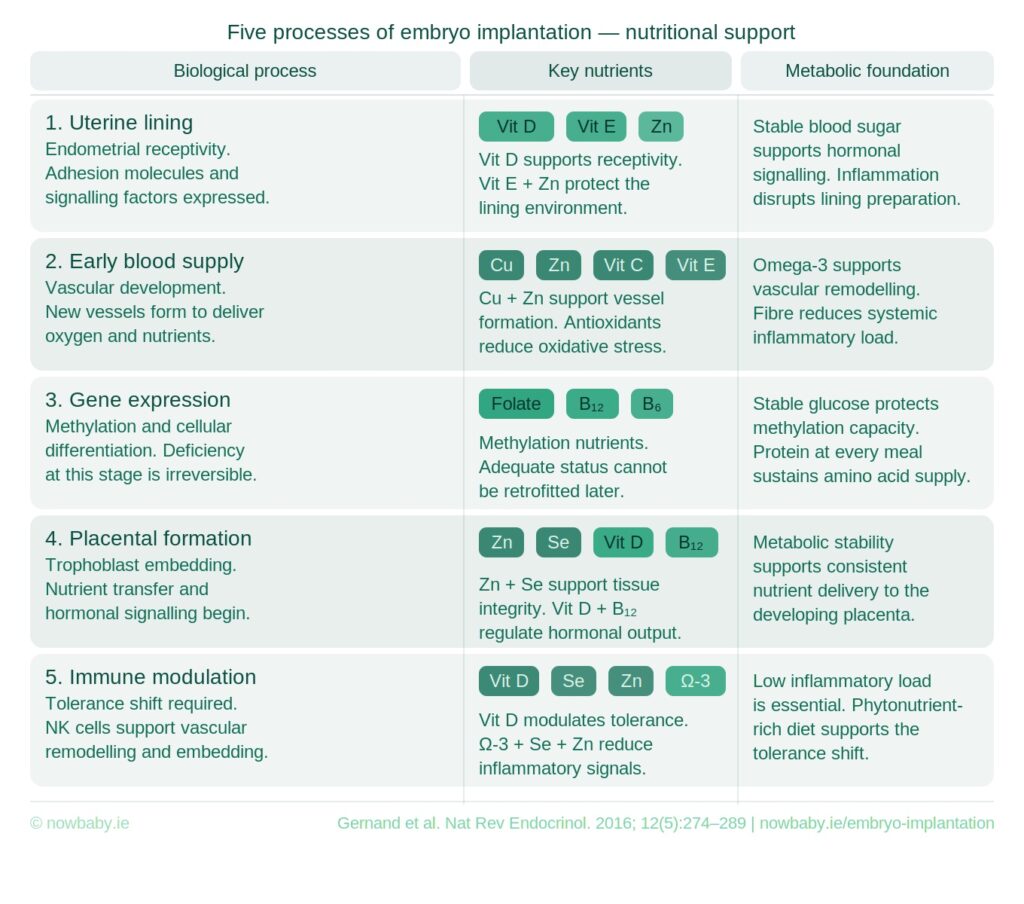
Your embryo continues activating after transfer.
Cellular energy demand increases.
Developmental momentum must continue building.
At the same time, the uterine environment must remain responsive.
Endometrial circulation must support ongoing attachment.
Hormonal steadiness must continue after transfer.
Immune tolerance must adjust to early pregnancy signalling.
Wider metabolic balance influences how implantation consolidates.
If this coordination weakens, implantation activity may reduce before pregnancy becomes clinically established.
How early pregnancy hormone patterns reflect implantation strength
Human chorionic gonadotropin production begins as implantation develops.
In a chemical pregnancy, hormone production starts but remains limited.
Levels may rise for several days.
They may plateau.
They may then fall as implantation activity diminishes.
This reflects changes in implantation strength unfolding across days.
Your body is responding to shifts in early pregnancy development as they occur.
What this indicates about embryo developmental momentum
Embryo development continues after transfer.
Cellular organisation progresses.
Energy production intensifies.
Growth direction becomes clearer.
Some embryos initiate implantation but do not sustain developmental drive within that uterine environment.
This reflects the interaction between embryo physiology and maternal readiness in that cycle.
When synchronisation improves in a later transfer, implantation stability can change significantly.
The phase in which pregnancy direction is decided
A chemical pregnancy shows that implantation activity can begin but does not always progress into sustained early pregnancy.
What determines outcome in a subsequent transfer is not whether implantation starts, but how strongly it continues developing in the days that follow.
After embryo transfer, biological momentum must build quickly.
Attachment processes need to deepen.
Hormonal signalling must continue strengthening.
Circulatory responsiveness within the endometrium must support ongoing developmental demand.
Energy availability within the maternal environment influences whether implantation consolidates.
This post-transfer phase is short and biologically decisive. It requires both metabolic stability and nutrient availability, not something supplements can provide.
Early pregnancy stability is shaped during the two-week wait while implantation activity is still evolving at a cellular level.
It is during this window that pregnancy either secures continued progression or begins to lose developmental strength.
 Embarking on your next transfer may fill you with dread. By following the Now Baby FET Implantation support meal plan from embryo transfer through the full two-week wait, your nutrition is precisely structured during the narrow biological window when early pregnancy is working to consolidate into sustained development.
It provides targeted nutritional structure during the exact phase in which implantation must continue building after transfer.
Supporting your physiology here can influence whether early pregnancy continues strengthening rather than losing momentum.
Follow the Now Baby FET Implantation Support Meal Plan from the day after embryo transfer to give early pregnancy the structured physiological support it requires during the two-week wait.
Get the FET Implantation Support Meal Plan
Moving forward after a chemical pregnancy
A chemical pregnancy means implantation started but did not secure ongoing development in that cycle.
Your embryo initiated biological interaction with your womb.
Early pregnancy signalling began.
But the progression required to maintain structural attachment and hormonal momentum did not continue.
The next transfer is a new implantation event.
Early implantation stability is determined in the days immediately after transfer, this is how your positive test occurs. Endometrial blood flow must remain responsive to support deepening attachment.
Hormone balance after transfer supports the continuation of implantation activity.
Cellular energy influences how securely early pregnancy consolidates.
Embryo-uterine communication depends on physiological conditions that sustain ongoing developmental momentum.
The two-week wait is the period in which pregnancy either stabilises or is lost. Supporting your physiology during this time helps implantation continue building so you can move forward toward meeting your baby.