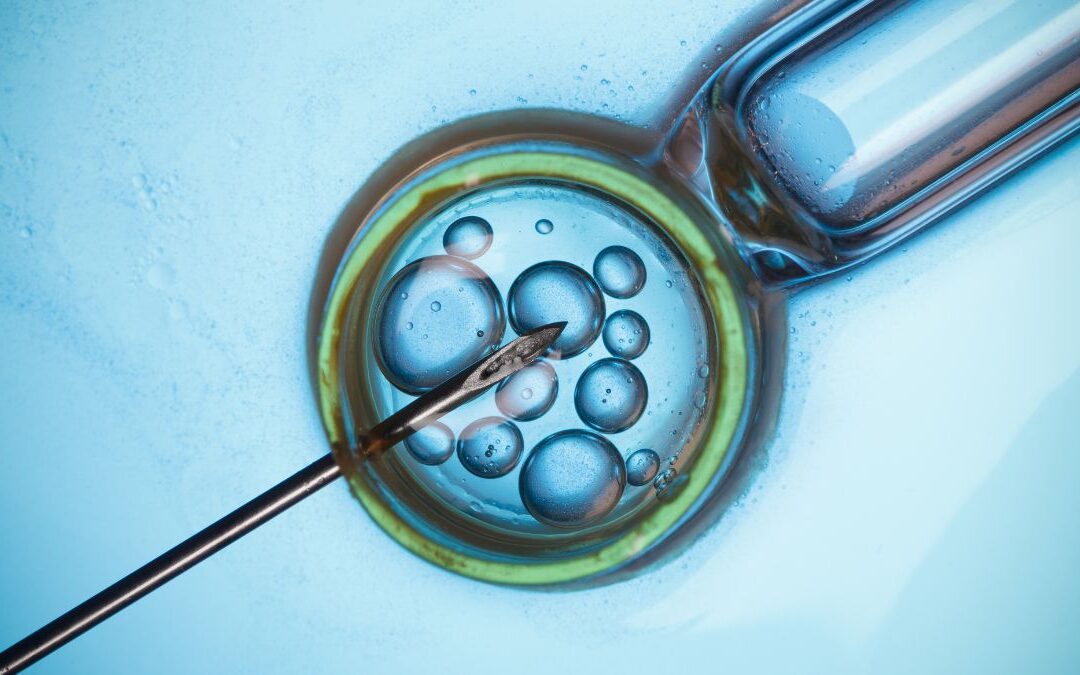

Two out of three untested embryo transfers do not lead to a live birth. Implantation failure is not a rare outcome at the edges of IVF. It is part of the reality of embryo transfer for most couples.
When your pregnancy test is negative, the result is clear. The reason it happened is not.
You reached transfer because an embryo had developed far enough to be placed into your uterus. From that point, pregnancy depended on several biological events unfolding in sequence between the embryo and the uterine lining.
A failed transfer tells you that pregnancy did not establish. It cannot show where that sequence stopped, why it stopped or whether the embryo was the only factor involved.
Understanding that distinction changes the question from “Why did my embryo fail?” to “What may have prevented implantation from continuing?”
What Does Implantation Failure After Embryo Transfer Mean?
Implantation failure means the transfer did not progress to an established pregnancy. The embryo was placed into the uterus, but the biological sequence needed to produce a detectable pregnancy did not continue far enough for hCG to rise.
Implantation is often described as the embryo attaching to the uterine lining. Attachment is only one stage. The embryo must make contact with the lining, begin to embed, communicate with surrounding cells and start the earliest stages of placental development.
A negative pregnancy test cannot show where that sequence stopped. It confirms the outcome, but not the point at which implantation was interrupted.
This is why implantation failure describes what happened rather than explaining why it happened. After one unsuccessful transfer, it does not prove there is a specific problem with the embryo, the egg or sperm that created it, the uterine lining or your ability to carry a pregnancy.
Why Can IVF Fail After Embryo Transfer?
After transfer, implantation depends on three variables: the embryo, the uterine lining and the maternal environment supporting both.
The embryo must continue developing after transfer. By then, its developmental capacity has been shaped by the egg and sperm that created it, the genetic material it carries and how its cells have divided since fertilisation.
Embryo grading describes how the embryo looked and developed in the laboratory. PGT-A checks chromosome numbers in a small sample of cells. Even a well-graded embryo reported as euploid can fail to implant because neither assessment can predict everything that happens after transfer.
The uterine lining must become receptive at the right time. Its response to progesterone helps determine when the embryo can attach and begin embedding.
The maternal environment must then support the developing relationship between the embryo and lining. Cellular energy production, immune regulation, nutrient availability and early blood-vessel development all form part of the conditions in which implantation continues.
A failed transfer may involve one variable or several overlapping factors. The negative pregnancy test confirms that pregnancy did not establish. It cannot identify which part of the process prevented it from continuing.
Before the cycle is reviewed, implantation failure needs to be confirmed by the beta hCG result. A negative beta means the transfer did not establish a detectable pregnancy. If hCG rose and then fell, implantation began but did not continue. That is a biochemical pregnancy, not implantation failure.
What Should Be Reviewed After a Failed Embryo Transfer?
Once implantation failure is confirmed by a negative beta hCG result, the cycle should be reviewed as a whole.
Your clinic may revisit the embryo, the lining preparation, progesterone timing and the transfer itself. That review can identify whether anything within the treatment cycle needs to change.
It cannot always explain why implantation stopped.
The next transfer still depends on the embryo, the lining and the maternal environment supporting both. That is where preparation before another transfer remains relevant.
Can Implantation Failure Be Prevented?
A failed transfer does not reveal one cause that can simply be removed before the next attempt.
Some factors are already fixed. The embryo has been created, the egg and sperm have contributed to its development and that transfer has already taken place.
Other factors remain open to review or change. These may include the uterine cavity, lining preparation, progesterone exposure, transfer timing and which embryo is selected next.
Depending on your history, your clinic may discuss:
- PGT-A
- sperm DNA damage testing
- endometrial receptivity testing, including ERA
- immunological testing
- endometrial or reproductive-tract microbiome testing
Each test examines a specific part of the implantation picture. None can assess the full maternal environment in which implantation must continue.
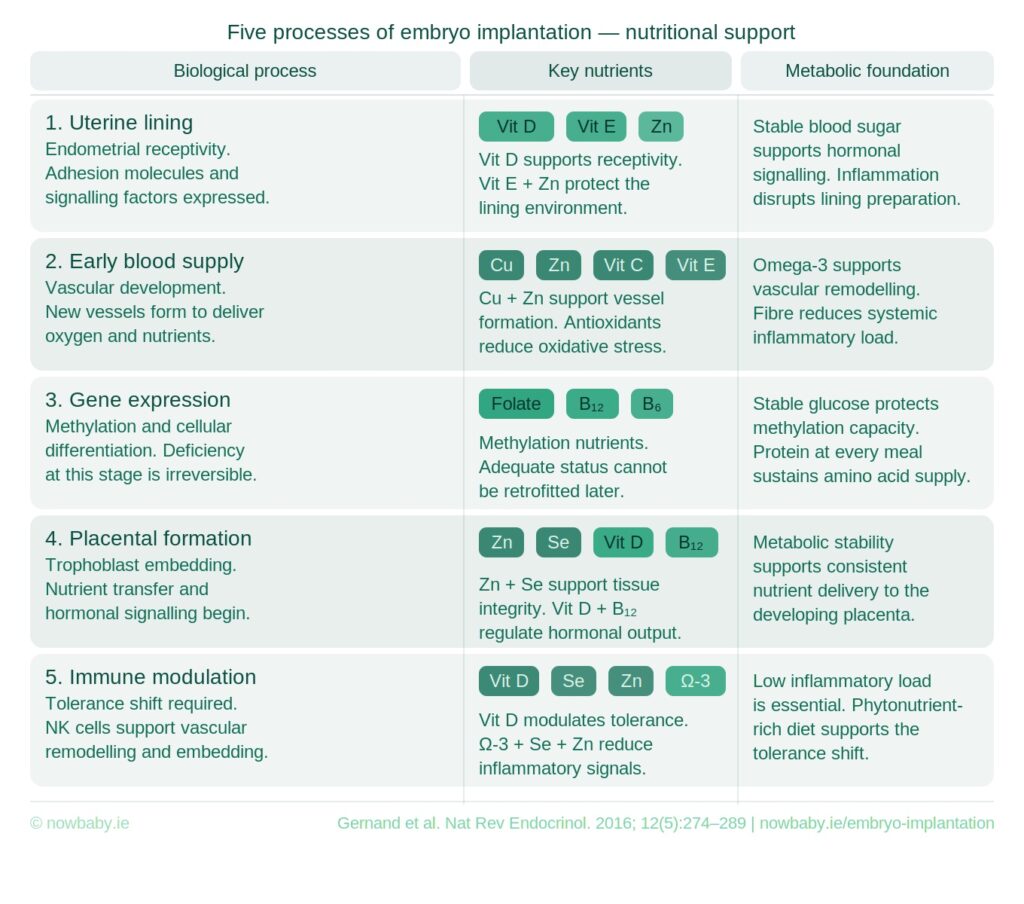
Implantation has 5 distinct phases and each has to complete successfully for pregnancy to continue.
During the days between embryo transfer and the beta hCG result, biological activity increases rapidly. The embryo continues dividing while its cells begin taking on different roles in the developing embryo and the structures that will support the pregnancy.
Each new cell must produce energy, copy DNA, build proteins and cell membranes and respond to signals from surrounding cells. As cell division and differentiation accelerate, the demand for energy and nutrients rises with them.
Amino acids are used to build proteins and new tissue. Fatty acids contribute to cell membranes and cellular signalling. Vitamins and minerals are involved in DNA synthesis, methylation, antioxidant defence, immune adaptation and early vascular development.
Metabolic stability influences how energy is supplied and used during this period. The nutritional demand created by this level of cellular activity extends beyond a supplement routine.
The days between transfer and beta are a period of increased nutritional demand while implantation and early development are underway.
Your next transfer
The two weeks after your last transfer were some of the hardest you will have experienced. Watching the days pass. Trying to hold hope and manage fear at the same time. And then the result that brought you here.
What most women carry out of that experience is the question of whether they did enough. Whether there was something more they could have done.
For your next transfer, the nutritional demands of those fourteen days can be planned for before the two-week wait begins.
Your clinic is not leaving anything to chance, and you shouldn’t either. The role of specific nutrients is critical to your success, and you have an opportunity to support this intentionally.
Starting the day after transfer, the Now Baby FET Implantation Support Meal Plan provides professionally measured and balanced nutrition across the implantation window. It is built around the increased demand for energy, amino acids, fatty acids, vitamins and minerals as cell division, differentiation and early placental development continue.
Recipes, shopping lists and batch-cooking guidance mean the plan is already worked out before the two-week wait begins.
That gives those fourteen days a clear nutritional framework — so that one thing, at least, is taken care of.