When you look at frozen embryo transfer success rates by age, the first thing you need to know is which age the figures refer to.
For the embryo’s age-related chromosome risk, the relevant age is your age when the egg was collected, not your age when the embryo is transferred.
Your current age may still affect the assessment and pregnancy care your clinic recommends. It does not change the maternal age used to interpret the embryo’s age-related risk.
Used correctly, these figures give you a realistic benchmark. The closest comparison is the live birth rate per frozen embryo transferred for your age when the egg was collected.
Frozen Embryo Transfer Success Rates by Age
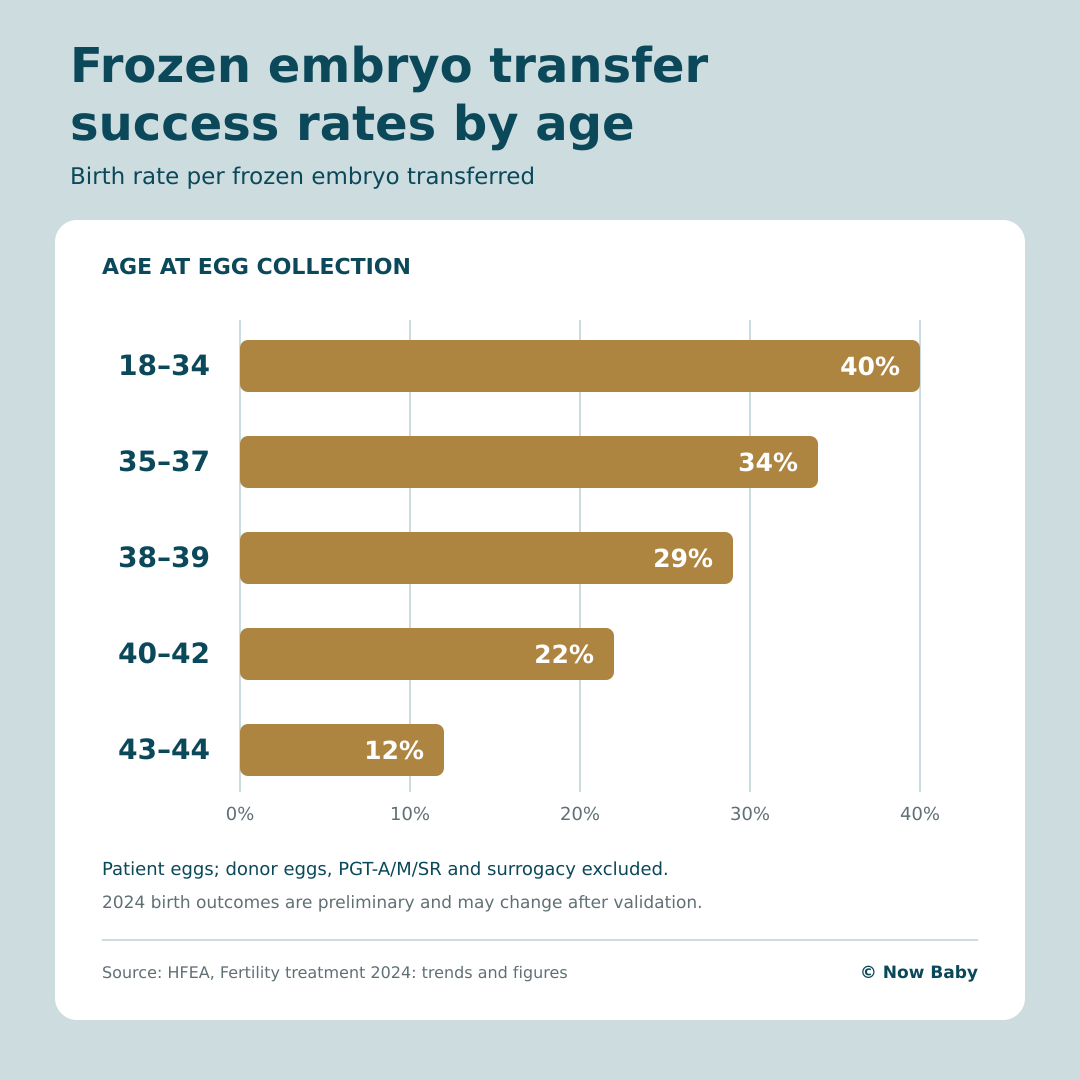
In 2024 UK data, the average birth rate was 34% per frozen embryo transferred using a woman’s own eggs.
A rate of 40% means that approximately 40 births were recorded for every 100 frozen embryos transferred in that age group. It is the outcome of each embryo transfer that is being measured, not the cumulative chance of having a baby from all embryos created during one egg collection.
Which Age Matters for Frozen Embryo Transfer Success?
Age can refer to two different points in a frozen transfer cycle: your age when the egg was collected and your age when the embryo is transferred.
For embryo-related risk, use your age at egg collection. This is the age linked to the likelihood of chromosome errors in the egg and therefore the embryo created from it.
Your age at transfer has a different clinical role. It may affect the health checks your clinic recommends before pregnancy and how your pregnancy is monitored, particularly after 40.
The distinction has not always been clear in published success rates. The HFEA changed its reporting method for frozen embryo transfers in 2024, replacing age at treatment with age at egg collection. When comparing older figures or clinic statistics, check which age has been used before applying the rate to your embryo.
Why Age at Egg Collection Affects the Success Rate
Each egg must divide its chromosomes accurately before fertilisation. This process becomes more vulnerable to error as eggs age.
An embryo created with too many or too few chromosomes is described as aneuploid. Some aneuploid embryos stop developing before transfer. Others reach the blastocyst stage but do not implant, or implant and later result in miscarriage.
This is why birth rates fall across the age groups in the table, even though every embryo included was suitable for freezing and later transfer. Reaching the frozen embryo stage confirms that the embryo developed far enough to be stored. It does not confirm its chromosome status or its capacity to complete implantation.
This age-related shift is why the overall frozen transfer rate of 34% is less useful than the rate for your age at egg collection.
Why Your Clinic’s Frozen Transfer Rate May Be Different
Clinic success rates are not always calculated in the same way. One clinic may report pregnancies per transfer, while another reports live births per embryo transferred.
The transfers included also affect the result. Donor eggs can raise a clinic’s overall success rate because the embryo-related age is the donor’s age when her eggs were collected. Including PGT-A embryos or combining fresh and frozen transfers can change the figure again.
Small numbers can also make a clinic’s rate move sharply from one year to the next.
Ask for the clinic’s live birth rate per frozen embryo transferred using your own eggs, based on your age at egg collection, and whether PGT-A transfers are included. That is the closest comparison with the figures above.
The Goal Is a Live Birth
While your immediate goal is to reach embryo transfer, your ultimate goal is for that transfer to lead to a live birth.
Every step before it—egg collection, fertilisation, embryo development, freezing, cycle preparation and thawing—has been intended to bring you closer to that outcome. Transfer completes the next clinical step. Implantation must then begin and continue.
Implantation has 5 distinct phases and each has to complete successfully for pregnancy to continue.
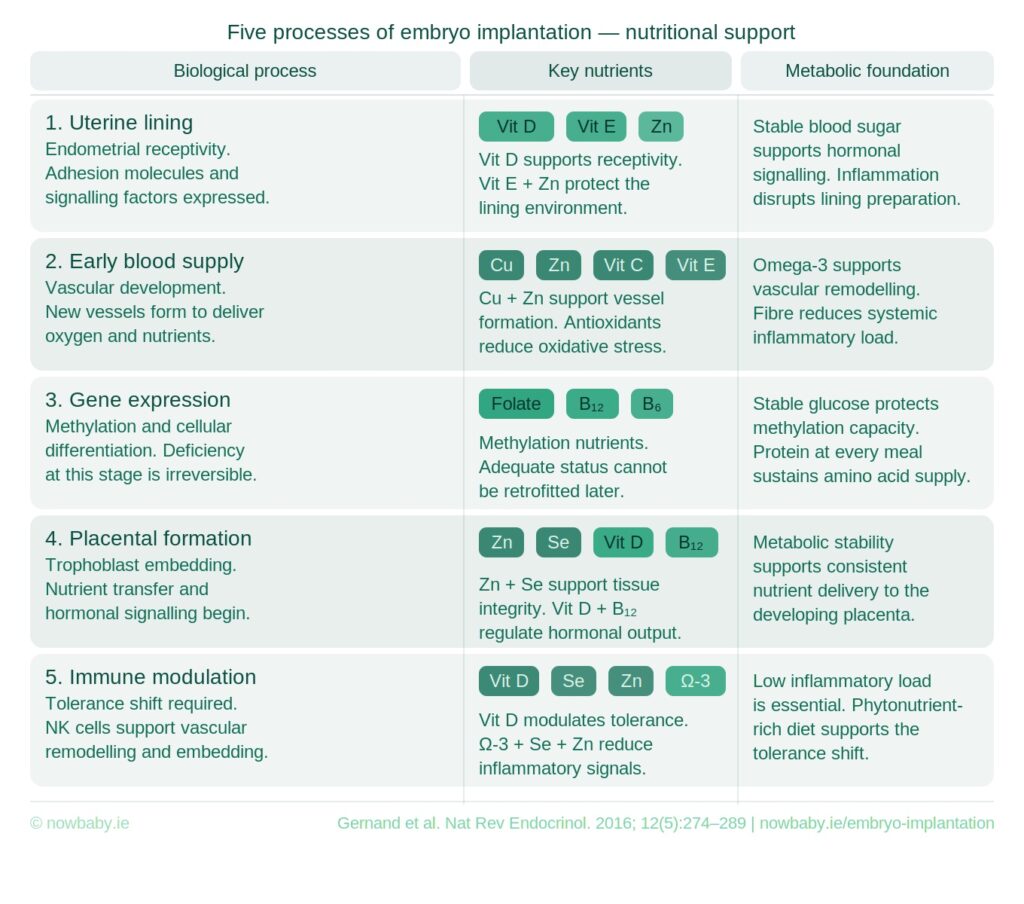
During those stages, cells divide rapidly, genes are regulated, blood vessels begin to develop, the immune system adapts and the earliest placental structures begin to form.
Each of these processes depends on a consistent supply of energy, amino acids, essential fats, vitamins and minerals. Food is how those nutritional raw materials are supplied during the days between transfer and beta.
Your clinic will prepare meticulously for transfer. You can bring that same level of precision to meeting the nutritional demands of your embryo at this critical phase.
The professionally designed Now Baby FET Implantation Support Meal Plan translates the science of the 5-stage implantation process into a structured 14-day food protocol, with every meal designed around the nutritional and metabolic demands between transfer and your beta test.
Get the FET Implantation Support Meal Plan