
Your embryo transfer is approaching and now you may be doubting if you can successfully navigate the next phase. IVIG has been suggested — but is it really worth it. The Human Fertilisation and Embryology Authority has evaluated it for you.
The Human Fertilisation and Embryology Authority (HFEA) is the UK’s independent regulator of fertility treatment. It reviews the evidence base for every add-on offered at licensed clinics and publishes a traffic light rating for each one. Red means there are potential safety concerns or evidence showing the add-on may reduce treatment effectiveness. IVIG carries a red rating.
That rating matters. Here’s what sits behind it.
What IVIG is and why it gets offered
IVIG is a blood product. It is prepared from the pooled plasma of thousands of donors and used in medicine to treat severe autoimmune and inflammatory diseases. Within fertility, it is offered on the basis of immune theory: the idea that in some patients, uterine immune activity may be interfering with embryo implantation.
The logic starts with a comparison to transplantation. A transplanted organ is rejected when the immune system recognises it as foreign. An embryo shares half its genetic material with the biological father — and the argument goes that the same rejection mechanism could apply.
The HFEA reviewed this theory directly. What the evidence shows is that immune rejection of the foetus rarely, if ever, happens. Understanding why requires separating two things that get conflated — the NK cells in your blood, and the NK cells in your uterus.
NK cells in blood tests versus NK cells in the uterus
The NK cells circulating in your blood are early responders to infection — they kill virus-infected cells. Uterine NK cells share the name but not the function. They are a distinct population, present in the lining of the uterus as a natural part of the implantation environment. The placenta sits as a physical barrier between them and your embryo. They are never in direct contact with it.
Current evidence points toward uterine NK cells playing a cooperative role in placental establishment — not an obstructive one.
The blood tests some clinics offer to measure NK cell numbers or activity are measuring the circulating population. They tell you nothing about the uterine population. They are not the same cells, they do not behave the same way, and the results do not translate.
The immune rejection premise is the clinical rationale for offering IVIG. The evidence does not support that premise.
What the HFEA’s review of the evidence found
The HFEA reviewed three randomised controlled trials providing moderate quality data. The results were too inconclusive to determine whether IVIG improves the chances of having a baby. No clinical benefit could be established — including for those who had experienced recurrent implantation failure or recurrent miscarriage.
The safety profile is not benign. Common side effects include headache, muscle pain, fever, chills and low back pain. More serious risks include thrombosis and kidney failure. This is a weekly intravenous infusion. It carries intravenous risk with every administration.
The HFEA’s position is clear: IVIG should not be taken as a fertility treatment.
What the HFEA framework gives you is a starting point for a conversation with your clinic. You can ask what evidence they are working from. You can ask how their recommendation relates to the HFEA’s assessment. You can ask what the alternative approaches are.
Asking those questions is not resistance. It is preparation.
What IVIG cannot reach
Your clinic manages the protocol. You influence the biology the protocol depends on.
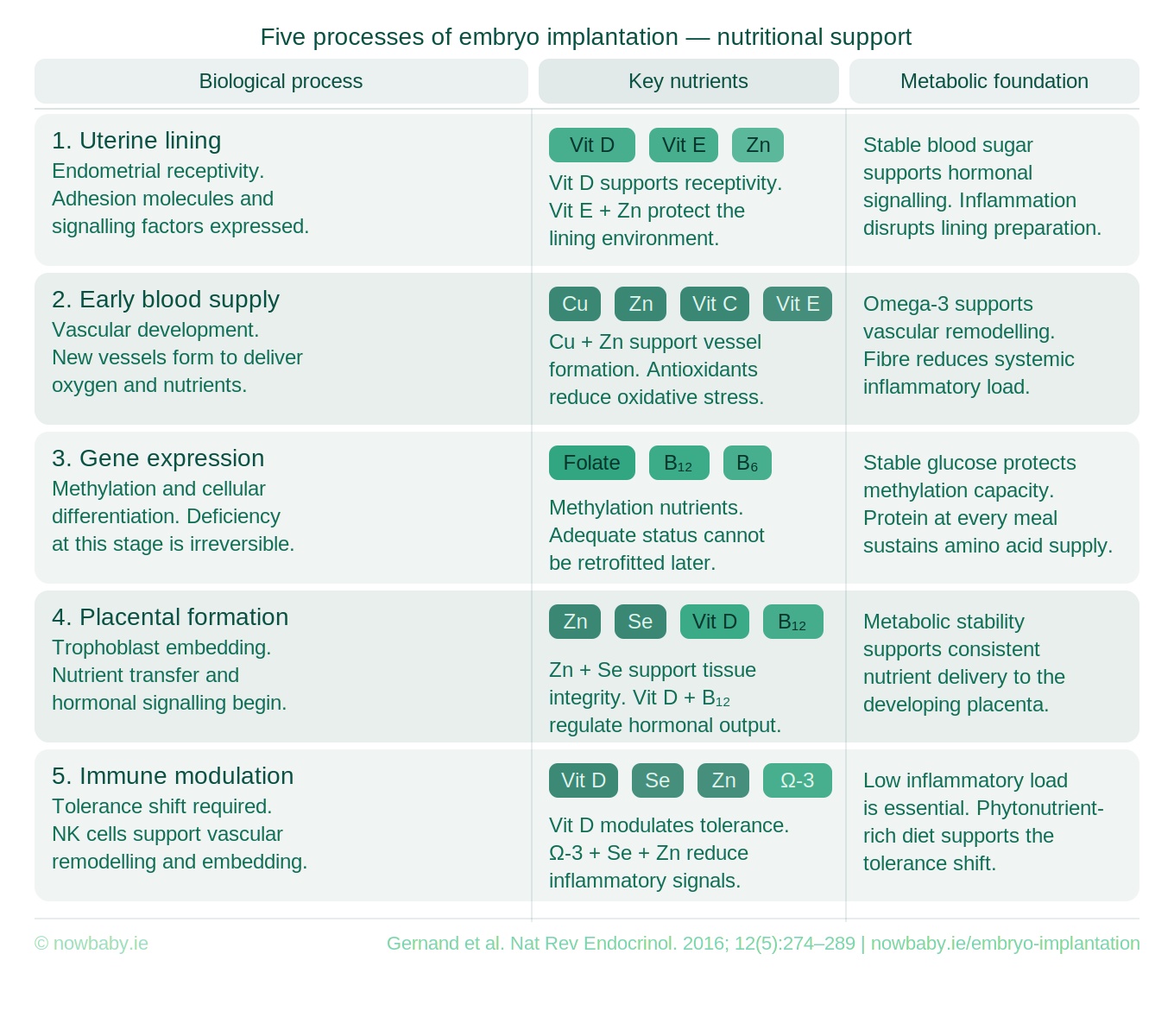
The inflammatory tone of the uterus responds to gut health, metabolic patterns, blood sugar stability, dietary fat quality and micronutrient status. Vitamin D modulates uterine NK cell activity and supports the immune tolerance that implantation depends on. Omega-3 fatty acids reduce systemic inflammatory signalling. Selenium and zinc support immune regulation at the cellular level. These are the nutritional inputs that influence whether the uterine environment is pro-inflammatory or tolerant — and none of them are addressed by an intravenous infusion.
IVIG acts on the immune system from outside. The nutritional environment shapes it from within.
Around 2 in 3 frozen transfers do not result in a live birth. Embryo implantation has 5 distinct phases and each has its own nutrient requirements. Your embryo needs to complete uterine lining preparation, early blood supply, gene expression, placental formation and immune modulation — all before a test can confirm anything. Each of those phases responds to what the body has been given to work with.
The Now Baby FET Implantation Meal Plan was designed around every one of those phases — the nutritional structure for the days your biology is doing its most demanding work. Professionally analysed. Beginning the day after transfer.