A medicated frozen embryo transfer cycle uses prescribed hormones to prepare the uterine lining and control the timing of embryo transfer.
Oestrogen and progesterone are given in sequence because each hormone has a different role in preparing the lining. Oestrogen comes first. Progesterone begins later, once the clinic decides the cycle is ready to move forward.
During the oestrogen stage, scans and sometimes blood tests help the clinic assess your response and decide what happens next.
What oestrogen does before frozen embryo transfer
The first job in a medicated FET cycle is to develop your uterine lining. Oestrogen provides the signal for that growth.
Under its influence, the endometrium rebuilds and becomes thicker as its cells multiply. Oestrogen also increases progesterone receptors within the tissue, preparing the lining to respond to the next hormone in the protocol.
This first stage needs to be established before the cycle can move on.
When oestrogen starts in a medicated FET cycle
In many medicated FET cycles, oestrogen starts on day 2 or day 3 of your bleed. Beginning early allows the clinic to take over the hormone timetable before ovulation would ordinarily determine what happens next.
A baseline scan may be arranged before the first dose. At this stage, the clinic is looking for a thin uterine lining and ovaries without a developing follicle or a cyst producing hormones. Blood tests may also be used to check that oestrogen and progesterone are low enough for the planned cycle to begin.
Day 2 or day 3 is not the starting point in every protocol. Medication may have been given during the previous cycle to suppress your natural hormone activity or help schedule treatment. Oestrogen then begins once that suppression has been confirmed, rather than according to the first days of a spontaneous cycle.
Irregular or absent periods can also change how the start is organised. The clinic may induce a withdrawal bleed or use scan and blood-test results to identify the point at which oestrogen can begin.
Oestrogen is commonly taken for around 10 to 14 days before the first lining assessment, although this is not a fixed countdown to transfer. The oestrogen stage can often be extended when more time is needed or when the clinic needs to adjust the treatment schedule.
That flexibility changes once progesterone begins. From that point, the number of hours or days of progesterone exposure must be matched much more closely to the developmental stage of the embryo being transferred.
How your uterine lining is monitored
After around 10 to 14 days of oestrogen, many clinics arrange a transvaginal ultrasound to see how your uterine lining has responded.
The sonographer measures the endometrium in millimetres and may also assess its appearance. Before progesterone begins, the lining may show a three-layered, or trilaminar, pattern on ultrasound.
The ovaries are checked at the same appointment. A growing dominant follicle could indicate that your own cycle is becoming active, which may affect the hormone timetable. The scan can also identify fluid within the uterine cavity or another finding that needs to be reviewed before the cycle moves forward.
Blood-test monitoring varies between clinics. Oestradiol may be measured to assess hormone exposure, while progesterone may be checked to confirm that it remains low before progesterone medication is started. An unexpected rise in progesterone can change the planned timing because the lining may already have begun moving into its next stage.
The scan and blood-test results determine whether the clinic can set your progesterone start date or whether oestrogen should continue before the lining is assessed again. Some cycles move forward after one monitoring appointment. Others need another scan or a change to the protocol first.
Why lining thickness is only one part of readiness
Lining thickness gives the clinic a clear, measurable sign that the endometrium has responded to oestrogen. A very thin lining is associated with lower pregnancy and live birth rates across groups of FET patients, which is why clinics pay close attention to the measurement.
Many clinics use a figure such as 7 mm or 8 mm as a practical guide when deciding whether the cycle is ready to move forward. But the endometrium does not change from unready to ready at one exact number. The measurement shows how the lining has developed and forms one part of the clinic’s overall assessment.
Ultrasound can measure the depth and appearance of the tissue. It cannot show everything happening within it, including how the endometrial cells will respond once progesterone begins or whether the lining will become receptive at the expected time.
Lining thickness matters. It is most useful when interpreted alongside the lining pattern, hormone results, the timing of the protocol and your wider clinical picture.
Oestrogen tablets, patches and other routes
Oestrogen can be given as tablets, patches, gel or, in some protocols, vaginal medication. Each route is being used for the same purpose: to provide enough oestrogen exposure for the uterine lining to develop before progesterone begins.
Tablets are commonly prescribed because the dose is easy to adjust. They may be taken once or several times each day as the amount of oestrogen is increased through the cycle. Oral oestrogen passes through the digestive system and liver before reaching the bloodstream, which can affect how much medication is available to the tissues.
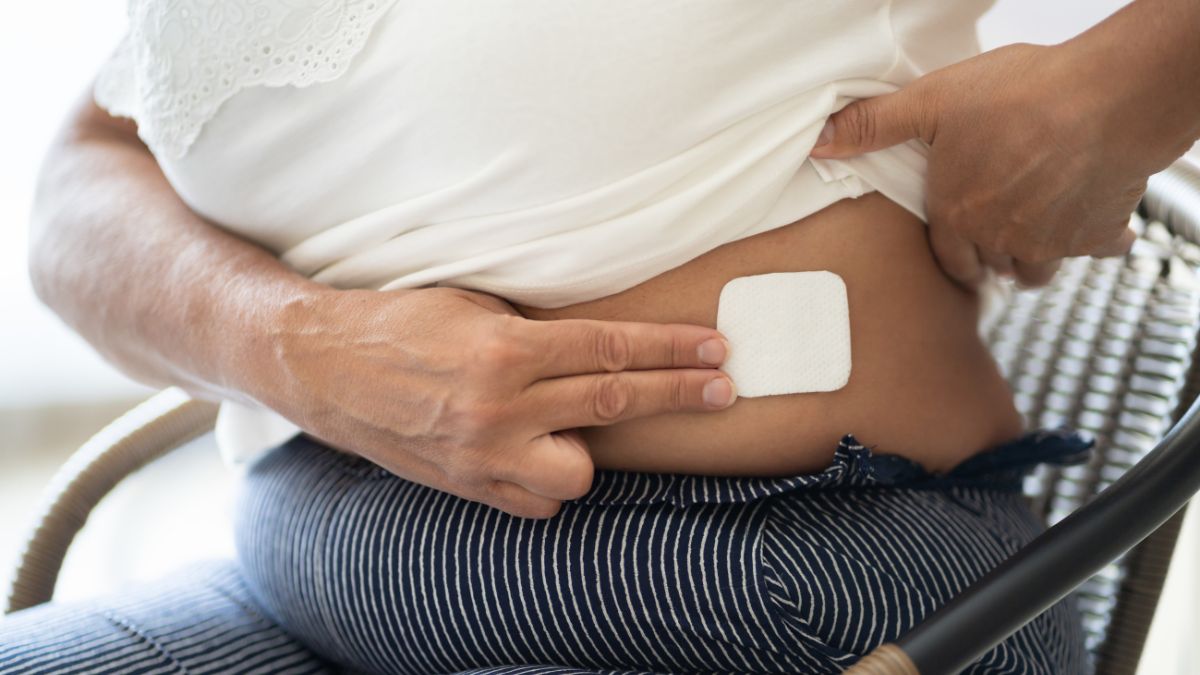
Patches release oestrogen through the skin over a set number of days. This provides a more continuous delivery and avoids the first passage through the liver. The practical drawbacks are usually local: patches can loosen or irritate the skin, particularly when several need to be worn at the same time.
Oestrogen gel is also absorbed through the skin. It needs to be applied to the recommended area and allowed to dry before the skin is covered or comes into contact with another person.
Some clinics prescribe oestrogen vaginally, either as the main route or alongside tablets or patches. Vaginal administration produces greater exposure within the uterine tissue, although it may also cause discharge and can make blood oestradiol results harder to interpret in the same way as oral or transdermal dosing.
No single route has been shown to be the best choice for every medicated FET cycle. Your clinic may base the prescription on its usual protocol, your medical history, how you tolerate the medication and how your lining responds.
What happens if your lining is slow to develop
The first lining scan gives your clinic a point from which to adjust the protocol. When the endometrium has developed more slowly than expected, oestrogen can usually continue for several more days before another scan is arranged.
The dose may be increased, or the route changed or combined to alter how the medication is absorbed. Where blood tests form part of the protocol, the oestradiol result may also help the clinic assess whether the current medication exposure is adequate.
A slower response at the first scan does not show that the lining has reached its final thickness. Some endometria need longer exposure to oestrogen, and this stage of a medicated FET cycle usually allows room for that extension.
When the lining remains thin despite additional time and changes to the medication, the clinic may look beyond the current dose. Previous scan measurements and treatment cycles can help show whether this is a repeated pattern.
The next decision is individual. The clinic may proceed using the best measurement reached or postpone the transfer and plan a different approach for another cycle.
What changes when progesterone begins
The first dose of progesterone marks a clear change in the FET cycle. Until this point, the uterine lining has been developing under oestrogen. Progesterone now changes the lining from tissue that is still growing into tissue preparing to receive an embryo.
The endometrial cells begin producing and releasing substances involved in the earliest contact between the embryo and the lining. Progesterone also changes the structure, blood supply and signalling activity within the endometrium as it moves towards its receptive phase.
The timetable becomes much more precise from this point. Your clinic counts the length of progesterone exposure before transfer so that the stage reached by the lining is matched to the developmental stage of your embryo. A Day 3 embryo and a Day 5 blastocyst therefore follow different progesterone schedules.
Oestrogen usually continues after progesterone begins, but its role has changed. It is no longer being used primarily to develop the lining. In a medicated FET cycle, ovulation does not occur and no corpus luteum forms to produce the oestrogen that would normally remain present during the luteal phase. The medication maintains that oestrogen exposure while progesterone controls the next changes within the endometrium.
Progesterone timing is measured from the first dose. Taking it earlier, later or differently from the prescribed schedule can change the number of hours the lining has been exposed before transfer, which is why your clinic gives an exact time for the medication to begin.
The lining is prepared. The five stages of implantation come next.
Your clinic has managed the hormonal support to bring you here. The implantation process that is about to unfold has five distinct stages: uterine lining receptivity, early blood supply, gene expression and cellular differentiation, placental formation and immune modulation.
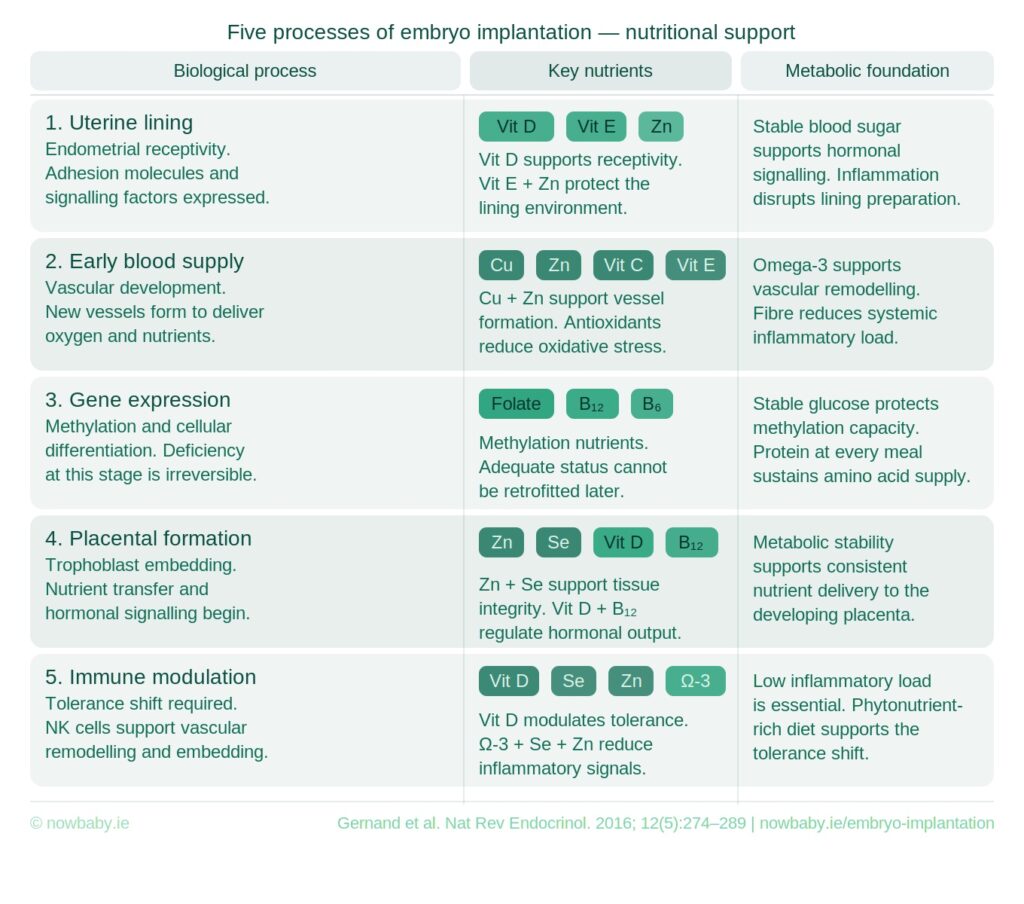
Each stage has its own nutritional and physiological demands. Cells need energy to divide, amino acids to build new tissue, essential fats to form cell membranes and specific micronutrients for blood-vessel development, gene regulation and immune adaptation. Metabolic stability affects how consistently those resources are available while this work continues.
Hormones cannot complete these five processes.
This is not a task that supplements can deliver either. These processes depend on a consistent supply of targeted nutrients together with the metabolic stability needed to use them.
Embryo implantation beyond hormone support
The implantation window depends on more than oestrogen and progesterone. There are multiple factors unfolding in a short window, the outcome of which decides whether your pregnancy progresses or not. Your clinic is not leaving anything to chance, and you shouldn’t either. The role of specific nutrients is critical to your success, and you have an opportunity to support this intentionally.
At Now Baby, we have taken the guesswork out for you and created a professionally curated FET implantation support meal plan. Each day of the two week wait before your beta test matters and what you eat during that phase matters too.
Get the FET Implantation Support Meal Plan