
You may have reached egg collection expecting the next step to be a fresh embryo transfer. Instead, you developed OHSS and your clinic cancelled the transfer. If an embryo implanted, the resulting rise in hCG could intensify the ovarian swelling and fluid shifts already caused by OHSS, allowing a manageable complication to become medically dangerous. Cancelling the fresh transfer removes that pregnancy-driven risk while your body recovers.
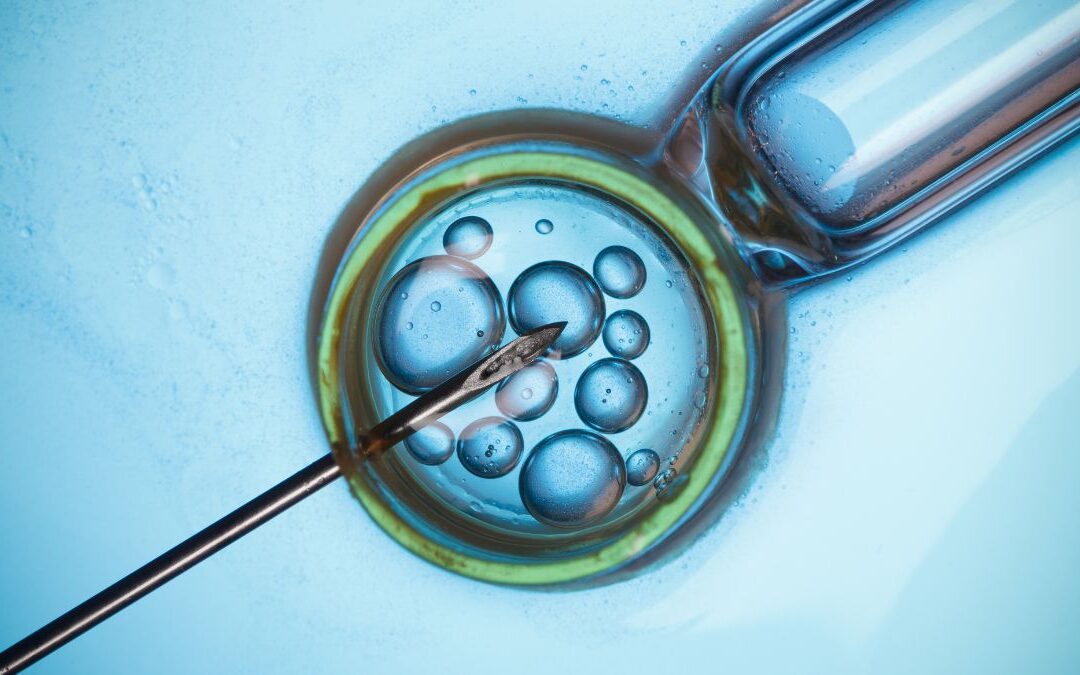
Egg collection, fertilisation and embryo development follow the same process whether the transfer is fresh or frozen. The difference now is instead of having a fresh transfer as part of this cycle, embryos that meet your clinic’s usual freezing criteria are frozen instead.
Once you have recovered and it is medically safe to proceed, transfer takes place in a separate frozen embryo transfer cycle. Your womb lining is prepared before an embryo is thawed and transferred.
Why Was Your Fresh Embryo Transfer Cancelled Due to OHSS?
OHSS develops when the ovaries respond excessively to the stimulation medicines used before egg collection. The ovaries become enlarged and release substances that make blood vessels more permeable, allowing fluid to leave the bloodstream and collect in the abdomen and, in more severe cases, around the lungs.
The hCG trigger used before egg collection can start this process. If a fresh embryo transfer resulted in pregnancy, the developing pregnancy would produce more hCG. This could intensify the ovarian swelling and fluid shifts, prolong the OHSS and increase the risk of serious complications including breathing difficulties, blood clots and reduced kidney function.
Pregnancies affected by OHSS are also associated with a higher risk of pre-eclampsia and premature birth. Cancelling the fresh transfer therefore protects both you and a potential pregnancy. It removes the risk of pregnancy continuing to drive the OHSS while your ovaries recover and your fluid balance returns to normal.
What Happens to Your Embryos After the Transfer Is Cancelled?
Cancelling your fresh transfer does not stop fertilisation or embryo development. Your embryology team continues to monitor the embryos in the laboratory, just as it would during a fresh-transfer cycle.
The difference comes when an embryo would usually be selected for transfer. Because no embryo can be placed into your womb while you have OHSS, the clinic freezes the embryos that meet its usual freezing criteria. These criteria apply to every embryo being considered for freezing.
The number frozen will depend on how many fertilised eggs continue developing and reach the stage and quality required by your laboratory. Your clinic should tell you how many embryos were frozen, the day each was frozen and its grade.
The embryos then remain in storage while you recover. They are not continuing to develop during this time: freezing pauses their biological activity until one is thawed for a later frozen embryo transfer.
What Happens to Your Body After Egg Collection and OHSS?
After egg collection, your ovaries remain enlarged and the blood vessels may continue leaking fluid into your abdomen. This can cause bloating, abdominal pain, nausea, rapid weight gain and reduced urine output. More severe fluid shifts can affect your breathing, circulation and kidney function.
Your clinic may monitor your weight, abdominal swelling, urine output, blood tests and symptoms. Treatment depends on the severity of the OHSS and may include fluids, medication to reduce the risk of blood clots, drainage of fluid from the abdomen or hospital care.
Without a pregnancy producing further hCG, OHSS usually begins to settle as the trigger medication leaves your body. Your ovaries gradually reduce in size, the fluid moves back into the bloodstream and your kidneys remove it through urine. A cancelled transfer reduces the risk of OHSS being prolonged by pregnancy, but you still need monitoring until the complication has resolved.
When Can You Have a Frozen Embryo Transfer After OHSS?
Your frozen embryo transfer will not be scheduled until the OHSS has resolved and your ovaries and fluid balance have returned to baseline. This usually means allowing the egg-collection cycle to end and waiting for at least one period before beginning an FET cycle.
The exact timing depends on the severity of the OHSS, how quickly your body recovers and the type of frozen transfer cycle your clinic recommends. Mild OHSS may settle within a couple of weeks, while more severe OHSS can delay treatment for longer.
Waiting does not change the time your embryos spend developing. Once frozen, their biological activity is paused until an embryo is thawed for transfer. The delay allows the effects of ovarian stimulation to settle so the transfer can take place in a separate cycle prepared for implantation.
Does a Freeze-All Cycle Affect Your Chance of Success?
Your chance of a live birth from this egg collection is best assessed across all the embryos transferred from it. This is the cumulative live birth rate, rather than the outcome of the first transfer alone.
Research comparing freeze-all cycles with cycles that begin with a fresh transfer has found little or no difference in cumulative live birth rates. The embryos are transferred later, after your body has recovered from ovarian stimulation and OHSS.
The frozen pathway introduces a freezing and thawing stage before transfer. Your individual outcome therefore depends on how many embryos are frozen, whether an embryo survives thawing and what happens during each frozen embryo transfer. The change from fresh to frozen primarily changes the timing and process, rather than lowering the overall chance from the egg collection.
Supporting Implantation After Your Frozen Embryo Transfer
OHSS changed your route from egg collection to embryo transfer. Once you have recovered and your frozen transfer goes ahead, the focus moves firmly towards what happens next.
Embryo transfer is the clinical procedure. Implantation is the biological process that must follow.
Implantation has 5 distinct phases and each has to complete successfully for pregnancy to continue.
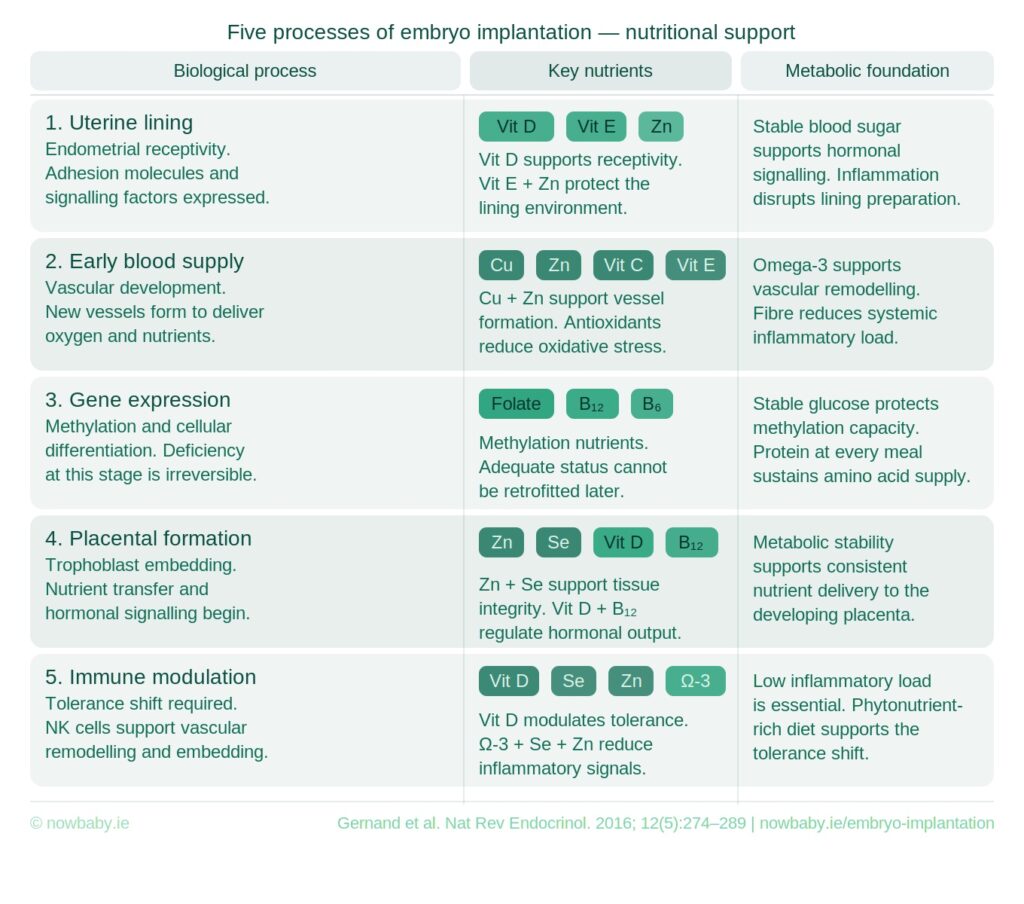
The two-week wait is not a passive phase; it is biologically active. Each phase creates different nutritional and metabolic requirements as implantation progresses.
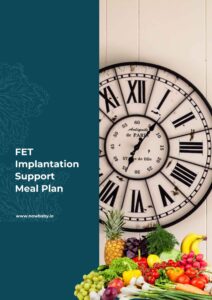
The Now Baby FET Implantation Support Meal Plan translates those changing requirements into 14 days of precisely structured, professionally measured nutrition. Every ingredient, quantity and meal is designed around the biological demands of the implantation process.
Your nutritional support for implantation is measured, planned and ready for when implantation is beginning.
Get the FET Implantation Support Meal Plan