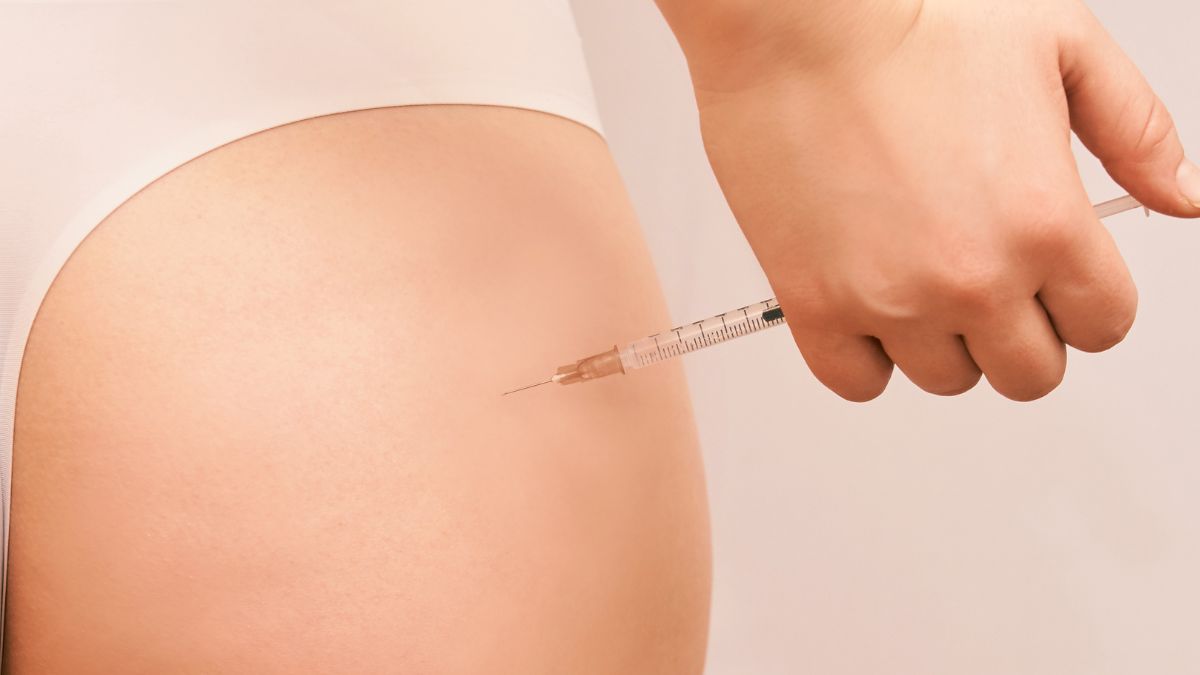
PIO stands for progesterone in oil.
PIO provides progesterone support to help prepare and maintain the uterine lining according to your clinic’s FET protocol.
PIO shots can feel like one of the biggest parts of a frozen embryo transfer cycle before you ever reach transfer day. You may be thinking about the needle, the timing, the bruising, the soreness, and whether the injection has gone in the right place.
Why PIO shots are used before and after FET
PIO provides progesterone support to help prepare and maintain the uterine lining according to your clinic’s FET protocol.
Before transfer, progesterone helps bring the lining into the phase your clinic wants for embryo transfer. After transfer, progesterone support continues to help maintain the lining during the early post-transfer phase.
PIO shots are one route for giving that progesterone before and after FET.
PIO shots versus progesterone suppositories
PIO shots and progesterone suppositories are two different prescribed routes for progesterone support. PIO is injected into muscle, where progesterone in oil is absorbed into the bloodstream. Progesterone suppositories are placed vaginally.
You may have a clear preference. PIO can feel more daunting because it involves a needle, muscle soreness, and bruising. Suppositories can feel easier for some patients, but they can also feel messy, irritating, or harder to manage through the day.
In medicated FET cycles, one clinical trial found live birth rates of 44% with intramuscular progesterone, 46% with combined vaginal and intramuscular progesterone, and 27% with vaginal progesterone alone. This is why clinics may prescribe PIO even when suppositories look easier to manage.
How to minimize injection discomfort
PIO is given into muscle, so injection comfort depends on the site, muscle tension, and technique. PIO shots are often easier when you are not trying to twist, tense, and inject at the same time. Use the area your clinic showed you, and ask them to mark it again when you are unsure. The upper outer hip or buttock area is usually used because it keeps the injection away from the sciatic nerve.
To make PIO shots easier to tolerate:
- Warm the syringe in your hand before injecting, when your clinic allows this.
- Keep the muscle relaxed rather than tense.
- Ask your partner to do the injection when that feels easier, especially if twisting to reach the site makes the muscle tense.
- Inject slowly and steadily.
- Rotate sides so the same area is not used repeatedly.
- Avoid injecting into an area that is already bruised, hard, swollen, or very sore.
- Apply gentle pressure afterwards if there is bleeding.
- Use gentle movement after the injection to help the muscle loosen.
- Use heat after the injection when your clinic has said this is safe.
Pain, bruising, and lumps can happen with PIO, but the injections should still be manageable. Contact your clinic when the pain is severe, the area becomes hot or increasingly swollen, or the injections are becoming difficult to continue.
Common PIO symptoms and side effects
PIO symptoms can come from the injection site and from progesterone itself. Injection-site symptoms are usually local: tenderness, bruising, lumps, tightness, or soreness in the muscle. Progesterone medication can also cause symptoms through the rest of the body.
Common progesterone-related symptoms can include:
- Bloating: eat at regular intervals, avoid skipping meals, and choose simple, balanced portions when your digestion feels slower.
- Constipation: increase fluids, include fibre-rich foods, and keep gentle movement in your day when your clinic has not restricted activity.
- Breast tenderness: wear a supportive bra and avoid using this symptom as a sign of whether the transfer has worked.
- Tiredness or sleepiness: allow more rest where you can, especially when progesterone makes you feel heavy or slowed down.
- Mood changes: name it as a medication effect and reduce extra pressure where possible.
- Mild cramping or pelvic heaviness: note the symptom, but avoid reading it as proof of implantation or failure.
These symptoms can feel emotionally loaded after transfer, but they are common progesterone effects. Contact your clinic when symptoms are severe, unusual for you, or making it difficult to continue the medication as prescribed.
Why symptoms do not tell you whether implantation worked
PIO can cause symptoms that feel like early pregnancy because both are linked to progesterone. That overlap makes symptoms feel meaningful, but it does not make them diagnostic.
PIO-related symptoms that can overlap with early pregnancy include:
- Breast tenderness
- Bloating
- Tiredness or sleepiness
- Mild cramping
- Constipation
- Mood changes
- Pelvic heaviness
- Frequent urination
This is the part that matters after FET: progesterone can make your body feel pregnant before a pregnancy test can tell you whether implantation has happened. A strong symptom day does not confirm implantation, and a quiet symptom day does not mean anything has gone wrong.
When to call your clinic about PIO
PIO is prescribed as part of your FET protocol, so the first reason to call your clinic is anything that could affect the dose, timing, or delivery of progesterone. A late dose, missed dose, leaking medication, a bent needle, uncertainty about whether the full dose went in, or running low on supplies all need clinic guidance.
The second reason to call is when the injection site is no longer just sore. Bruising, tenderness, and small lumps can happen with PIO, but increasing heat, spreading redness, worsening swelling, severe pain, discharge, fever, or feeling unwell needs medical advice. These symptoms need to be checked because they can point to irritation, infection, or a reaction that should not be managed by guessing at home.
The third reason to call is when PIO is becoming difficult to continue. Severe injection anxiety, repeated painful lumps, difficulty reaching the correct site, or pain that makes you dread the next dose are valid reasons to ask for help. Your clinic may want to review your injection technique, confirm the site, check the prescription, or advise on the next step.
Keep taking PIO exactly as prescribed unless your clinic changes the prescription.
The limitations of PIO
PIO provides progesterone support to help prepare and maintain the uterine lining according to your clinic’s FET protocol. That is an important part of a frozen embryo transfer cycle, but progesterone is not the whole implantation process.
After transfer, your body is supporting several linked processes:
- A receptive lining — the endometrium needs to stay in the right phase for implantation.
- Early attachment — the embryo and uterine lining begin the first stages of contact.
- Blood flow support — oxygen and nutrients need to reach the implantation site.
- Immune balance — the immune system needs to support implantation without overreacting.
- Early placental signals — the first steps toward placental development and pregnancy signalling begin.
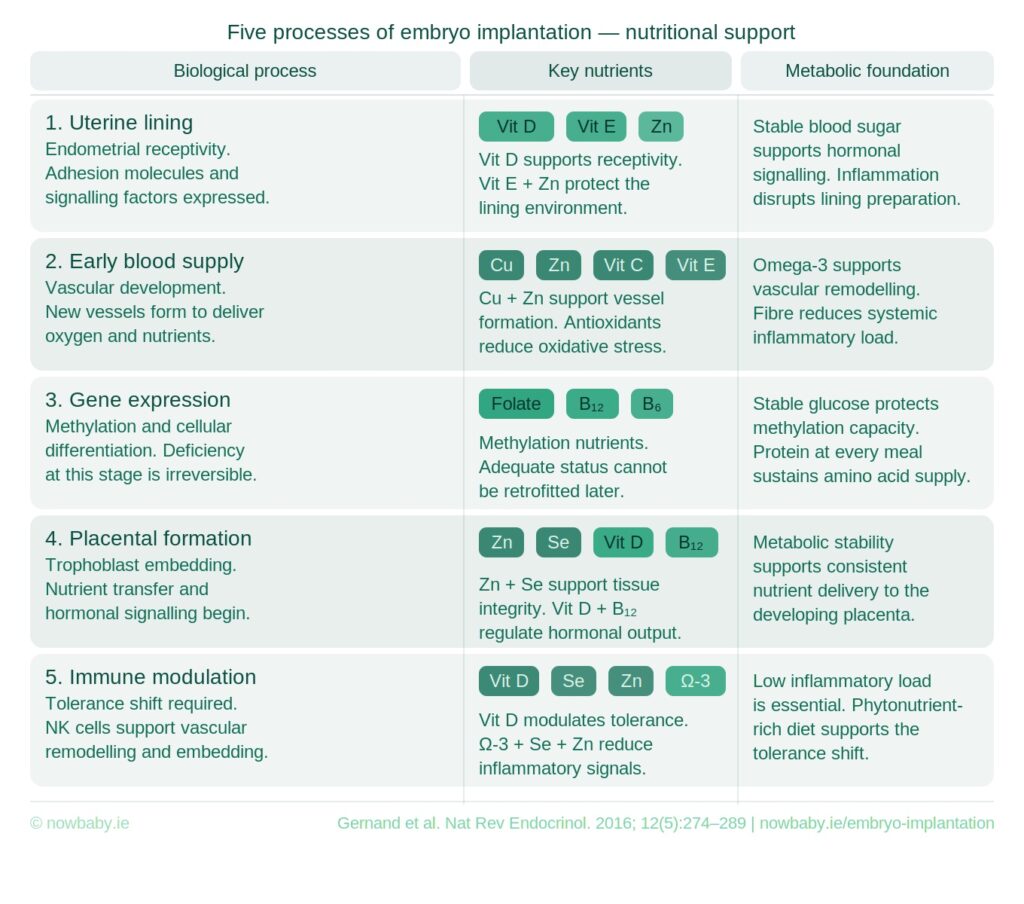
PIO supports the progesterone part of your FET protocol. Targeted nutrition supports the implantation needs progesterone does not cover.
The Now Baby FET Implantation Support meal plan takes all the guesswork and macro counting out of it for you.
Starting the day after transfer, it gives you a clear nutrition structure for the implantation window; balanced macros, targeted nutrient and meals designed to support successful implantation.
Your clinic manages the progesterone protocol. The Now Baby FET Implantation Support meal plan gives you the nutrition structure progesterone cannot provide: balanced macros, steady nourishment and clear daily meals from the day after transfer through the two-week wait.
FET Implantation Meal Plan
Your clinic maps your progesterone protocol.
The Now Baby FET Implantation Support meal plan maps your nutrition from the day after transfer through the implantation window.
With balanced macros, targeted nutrients and professionally developed daily meals for the implantation window, it takes all the guesswork out for you.