

Letrozole is widely associated with ovulation induction, so finding it on a frozen embryo transfer medication plan can seem unexpected. Your embryos have already been created and no eggs are being collected.
In an FET cycle, letrozole has a narrower job. Understanding that job explains why your clinic has chosen this route, what the additional medication is for and what letrozole can — and cannot — contribute to the transfer.
Why is letrozole used in a frozen embryo transfer cycle?
Before a frozen embryo can be transferred, the endometrium must develop and then receive progesterone for the correct length of time. A letrozole FET creates an ovulatory route to that transfer window.
This can provide an alternative to relying entirely on spontaneous ovulation or using a programmed cycle in which oestrogen and progesterone medication prepare the lining. The clinic can work with your ovarian response while monitoring the cycle closely enough to time the transfer.
Letrozole is being used to organise the cycle before transfer. It does not act on the frozen embryo.
How does letrozole prepare your body for embryo transfer?
Letrozole blocks aromatase, temporarily reducing oestrogen feedback so that follicle-stimulating hormone increases and encourages a follicle to develop.
As that follicle grows, your own oestrogen production rises and the endometrium develops. After ovulation, the follicle becomes the corpus luteum, which produces progesterone for the next phase of the cycle.
This distinction matters: letrozole does not build the lining by supplying oestrogen. It prompts the ovarian response that generates the hormones used in an ovulatory FET cycle. Your clinic then uses ovulation and progesterone exposure to align the endometrium with the developmental age of the embryo.
Who may be offered a letrozole FET cycle?
You may be offered letrozole if absent or irregular ovulation would make a natural FET difficult to begin or time. It is commonly considered for women with PCOS or long, irregular cycles.
Letrozole-assisted FET is also used in women who ovulate regularly. In that setting, it allows the clinic to create and monitor an ovulatory cycle rather than replacing it with a fully programmed protocol.
Your diagnosis does not decide the protocol on its own. Previous cycle response, endometrial development and the clinic’s approach to FET preparation also shape the recommendation.
What happens during a letrozole frozen embryo transfer cycle?
Letrozole is taken for a short course early in the menstrual cycle. Your clinic then uses ultrasound, and sometimes hormone tests, to follow the developing follicle and endometrium.
Once the follicle is ready, the clinic may wait for your natural luteinising hormone surge or give an hCG trigger to control when ovulation occurs. The transfer date is calculated from ovulation and any prescribed progesterone so that the endometrium reaches the correct stage for the developmental age of the embryo.
The exact tablet dose, monitoring schedule and transfer calculation vary between clinics. Follow the dates on your own treatment plan, particularly if the clinic changes them after a scan or blood test.
Why might you still need an hCG trigger or progesterone?
Each medicine has a separate job.
Letrozole supports follicle development but does not provide a precise ovulation time. An hCG trigger can give the clinic a defined point from which to schedule ovulation and transfer. If your natural hormone surge is clear and appropriately timed, a trigger may not be needed.
Because the trigger contains hCG — the hormone measured by pregnancy tests — testing before your clinic’s scheduled date may give a positive result from the injection rather than implantation. Letrozole itself does not cause a false-positive pregnancy test.
Progesterone may be prescribed after ovulation as luteal support. Its use does not mean letrozole has failed or that your body produced no progesterone. The clinic is adding support to the post-ovulation phase and controlling the progesterone exposure used to time transfer.
Does letrozole improve frozen embryo transfer success rates?
Letrozole can make an ovulatory FET cycle possible or easier to time. That is different from proving that the medicine itself makes implantation more likely.
Current evidence does not establish a higher live-birth rate with letrozole-assisted FET than with programmed endometrial preparation in women with PCOS.
The relevant measure is whether the protocol solves the problem it was selected for: creating a usable ovulation and giving the clinic a reliable transfer window. Embryo competence, accurate timing and the biology after transfer still determine whether pregnancy continues.
If your clinic recommends letrozole, ask what it is intended to achieve in your cycle. The answer should be more specific than improving your chance of success.
What are the side effects of letrozole during FET?
Letrozole is usually taken for only a few days. Possible effects during a short fertility course include hot flushes, headache, tiredness, dizziness and nausea.
More than one follicle can develop, which is one reason the ovaries are monitored during the cycle. Your clinic will tell you whether the response is appropriate for the planned transfer.
Preparing for implantation in a letrozole FET cycle
Letrozole helps your clinic establish the hormonal route to transfer. The trigger and progesterone refine its timing. Once the embryo has been transferred, implantation still has to unfold.
Implantation has 5 distinct phases and each has to complete successfully for pregnancy to continue.
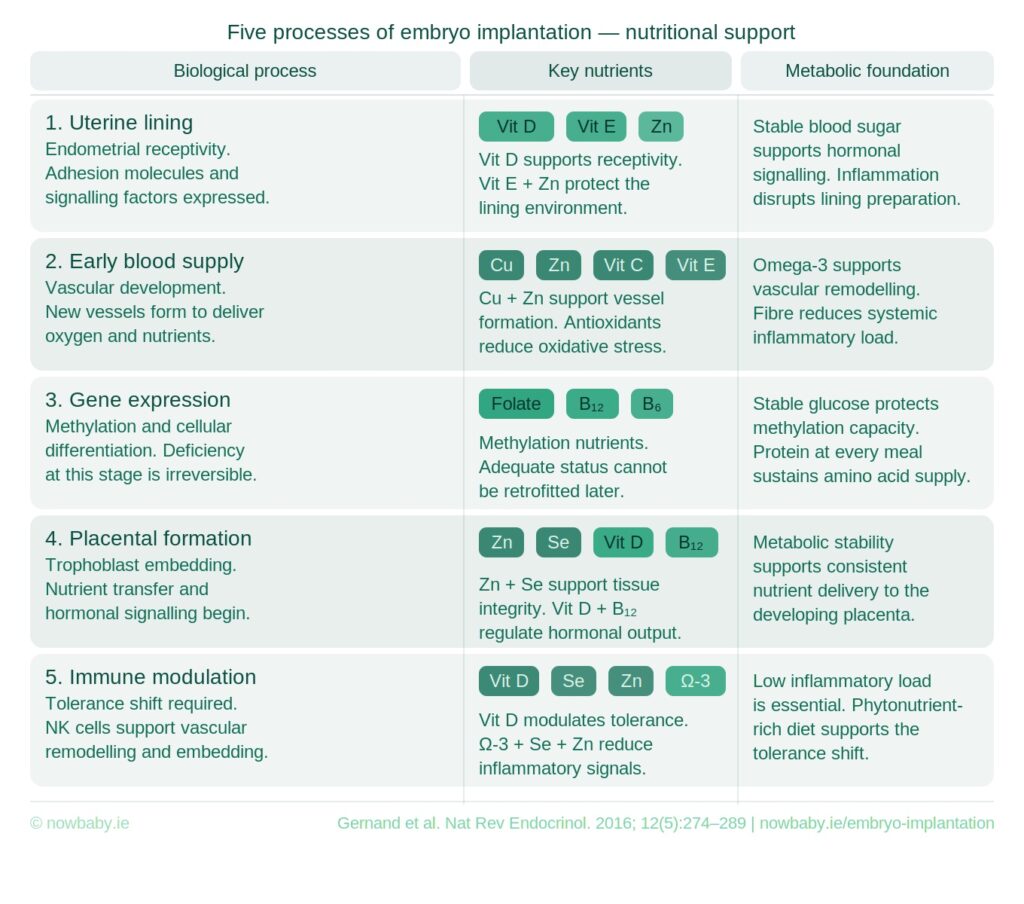
The two-week wait is not a passive phase; it is biologically active. Each phase creates different nutritional and metabolic requirements as implantation progresses.
The Now Baby FET Implantation Support Meal Plan translates those changing requirements into 14 days of precisely structured, professionally measured nutrition. Every ingredient, quantity and meal is designed around the biological demands of the implantation process.
Your nutritional support for implantation is measured, planned and ready for when implantation is beginning.
Get the FET Implantation Support Meal Plan