

As an IVF warrior, you know progesterone has a central role after embryo transfer and you are probably paying close attention to your results. A blood result reported as low can make it feel as though implantation is already slipping away. But progesterone levels cannot be interpreted in isolation: the timing of the blood draw, the route of your medication and the protocol your clinic is using all affect what that result means and what happens next.
Why progesterone is monitored after FET
Progesterone is monitored after FET because the uterine lining must be exposed to the hormone for the right length of time before and after transfer. Oestrogen builds the lining. Progesterone changes it from tissue that is still growing into tissue that is receptive to an embryo. This transition helps determine when the implantation window opens.
When your clinic measures progesterone, the blood test captures how much is circulating at that moment. It can alert the clinic that your prescribed medication may need to be reviewed or supplemented. Lower serum progesterone around transfer has been associated with lower pregnancy and live birth rates in studies of medicated FET, but the result is not a direct reading of what is happening inside the uterine lining.
This makes progesterone monitoring a clinical checkpoint, not an implantation test. It helps your clinic assess whether the result fits the dose, route and timing used in your protocol. It cannot confirm that implantation is failing or predict the outcome of your transfer on its own.
How often progesterone is measured after FET
There is no universal schedule for progesterone testing after frozen embryo transfer. Your clinic may measure it before transfer, on transfer day, during the days after transfer or alongside your pregnancy blood test. Other clinics only repeat the test when an earlier result needs review or your progesterone medication has been adjusted.
The target used to interpret your result may also change according to when the sample was taken. A level measured around transfer cannot automatically be compared with one measured several days later. The result is also affected by the route of progesterone, the time since your last dose and the testing parameters used by your clinic.
This is why progesterone numbers shared in forums are rarely directly comparable. Two women may both be told that their result is “low”, while being tested on different days, at different times after medication and against different clinic targets. The number only becomes meaningful when it is placed back into the exact FET protocol in which it was measured.
What “low progesterone” can mean
A progesterone result below 10 ng/mL — approximately 32 nmol/L — is often treated as low enough for a clinic to review. But there is no single cut-off that can be applied to every blood test taken after frozen embryo transfer.
The result must be interpreted alongside the timing of the blood draw, when you last took your medication, how the progesterone is being administered and the target used by your clinic. A level that appears low may reflect the point at which the sample was taken, the amount reaching your bloodstream or the way your body is absorbing that particular route.
A low result means that your circulating progesterone was below the level your clinic expected at that moment. It may lead your clinic to repeat the test, increase the dose or add another route of progesterone.
It does not show whether implantation has started, whether it will continue or what the outcome of your transfer will be. It is a treatment result that needs clinical interpretation, not a verdict on your embryo.
Why timing and medication route matter
Your progesterone level rises after each dose and falls as the time since that dose increases. A blood sample taken soon after your medication may therefore produce a different result from one taken shortly before your next dose. Your clinic needs to know when the sample was collected in relation to your medication schedule before deciding whether the level is lower than expected.
The route matters because progesterone does not appear in the bloodstream in the same way after vaginal and injected medication. Vaginal progesterone is delivered close to the uterus and may produce a lower blood level than progesterone given by intramuscular or subcutaneous injection. An injection generally produces more progesterone in the circulation, making the serum result appear higher.
This does not make a lower result from vaginal progesterone irrelevant. It means the number must be interpreted against the expected range for that route rather than compared with a result produced by a different form of medication.
The same number can therefore carry a different meaning depending on what you are taking, when you last took it and when your blood was drawn. This is why another person’s progesterone result cannot tell you what yours should be.
What your clinic may do with a low result
Your clinic may repeat the blood test, increase your current dose or add progesterone by another route. The response will depend on the level recorded, how many days have passed since transfer and the progesterone already included in your protocol. Vaginal progesterone may, for example, be combined with an injection to increase circulating progesterone. In other cases, your clinic may decide that the result remains acceptable for your protocol and make no change.
Progesterone helps prepare and maintain the uterine lining. Implantation also depends on the embryo attaching, moving into the lining, establishing an early blood supply and beginning placental development. Hormone support matters, but it is supporting a much wider biological process.
Implantation depends on more than progesterone
A low progesterone result can feel as though one number now holds the outcome of your transfer. Progesterone is essential because it helps prepare and maintain the uterine lining, but implantation is not a single hormone event.
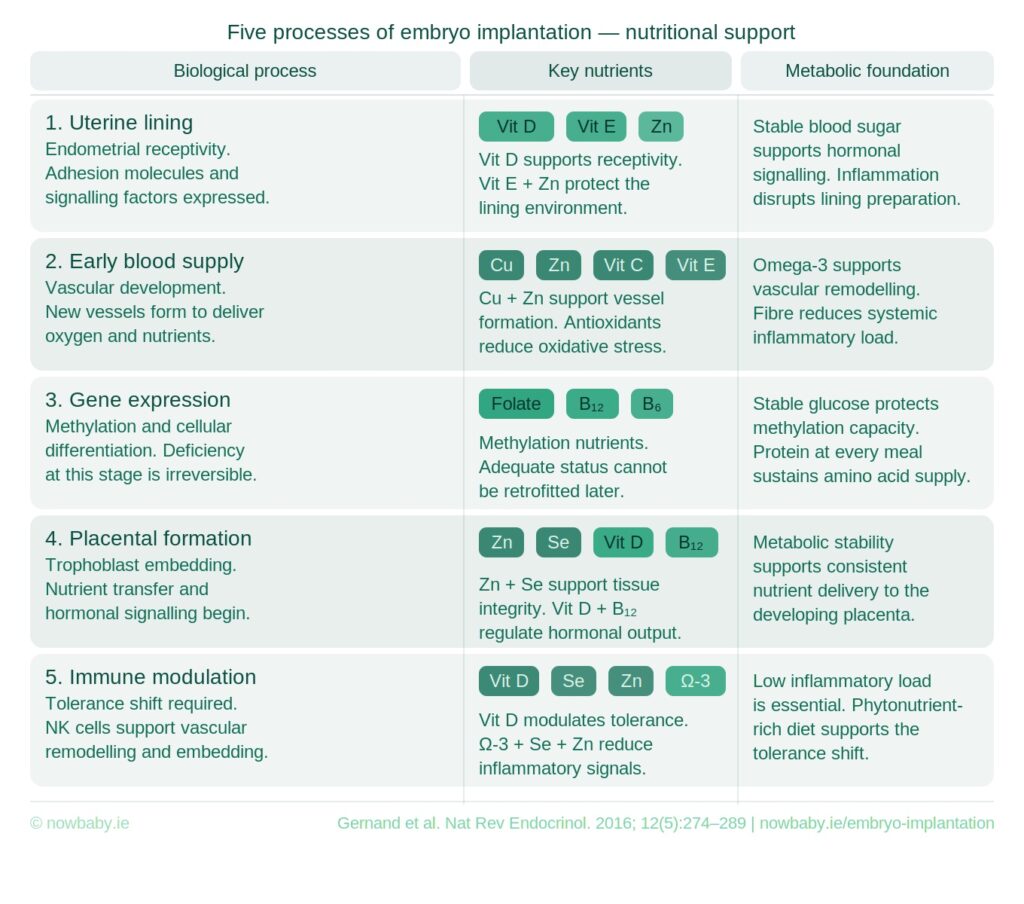
After transfer, implantation involves five connected biological processes: uterine lining, early blood supply, gene expression, placental formation and immune modulation.
Each has its own nutritional demands. Progesterone cannot complete these five processes. Its specific role is to prepare and maintain the uterine lining.
This is not a task that supplements can deliver either. These processes depend on a consistent supply of energy, protein, fats, vitamins and minerals from food, together with the metabolic stability needed to use them.
Your implantation window beyond progesterone
The implantation window is more than a progesterone result. There are multiple factors unfolding in a short window, the outcome of which decides whether your pregnancy progresses or not. Your clinic is not leaving anything to chance, and you shouldn’t either. The role of specific nutrients is critical to your success, and you have an opportunity to support this intentionally.
At Now Baby, we have taken the guesswork out for you and created a professionally curated FET implantation support meal plan. Each day of the two week wait before your beta test matters and what you eat during that phase matters too.
Get the FET Implantation Support Meal Plan