
Progesterone symptoms after frozen embryo transfer can look very similar to early pregnancy symptoms.
Cramps, sore breasts, tiredness, bloating, discharge, mood changes and mild spotting can all happen during the days after transfer. The difficult part is that these symptoms can appear whether implantation is happening or not.
After transfer, progesterone is already in the system at levels high enough to affect more than the uterine lining.
That is what creates the overlap: a change you can feel may come from the medication rather than from implantation.
So when symptoms appear after FET, they are not meaningless. But they cannot be used as a reliable sign that implantation has worked.
Why progesterone causes symptoms after FET
Progesterone has a specific job in a frozen embryo transfer cycle.
It helps move the endometrium, the lining of the uterus, into the secretory phase. This is the phase where the lining becomes more receptive to an embryo and better prepared for the biological events that follow transfer.
Progesterone does not act only on the uterus.
Progesterone receptors are found in several tissues, including the breasts, bowel, brain and reproductive tract. That is why progesterone can cause symptoms beyond the lining itself.
It can slow bowel movement, which may lead to bloating or constipation.
It can affect breast tissue, which may cause tenderness or heaviness.
It can affect the nervous system, which may make you feel more tired, sleepy or emotionally sensitive.
Common progesterone symptoms after transfer
Progesterone symptoms after frozen embryo transfer can vary from one woman to another. They may also change from one cycle to the next, even when the protocol is similar.
Common symptoms include:
- mild cramping or pulling sensations
- breast tenderness or fullness
- tiredness or sleepiness
- bloating
- constipation
- nausea or appetite changes
- headaches
- mood changes
Cramping after transfer can come from more than one source. The uterus may feel more active because of hormonal support. The embryo transfer procedure can also cause mild cervical or uterine irritation. Progesterone-related bowel slowing can create pressure that feels like pelvic cramping, even when the bowel is part of the sensation.
Breast tenderness is also difficult to interpret.
Sore breasts can happen because of progesterone. They can also happen in early pregnancy. The symptom feels similar because the hormone environment overlaps.
Tiredness works the same way.
Progesterone can have a sedating effect. Early pregnancy can also bring fatigue. Feeling exhausted after transfer does not separate medication effect from implantation.
Why symptoms do not confirm implantation
A symptom can mean a few different things. The same symptom can be caused by progesterone medication, oestrogen medication, the transfer procedure, bowel changes, early pregnancy, or the normal variation of your own body.
This is why symptom-checking becomes so frustrating after FET. The body is giving information, but not the type of information that can confirm what is happening at embryo level.
A cramp, a wave of tiredness, breast tenderness that comes and goes, or a quieter day can all feel meaningful because the timing feels important.
Implantation is a cellular and hormonal process. In the earliest days, it does not produce a symptom pattern that can be separated cleanly from progesterone, oestrogen, the transfer procedure or normal body variation.
The symptom pattern is real. It is just not specific enough to carry the answer.
Your clinic’s pregnancy test timing matters because hCG, the hormone measured in pregnancy testing, needs time to rise to a detectable level. Testing too early can create confusing information, especially if your clinic has given specific instructions about when to test.
The blood test or clinic-directed pregnancy test is the point where the hCG becomes measurable. Symptoms before that point are not reliable evidence of implantation, no matter how strong they are.
No symptoms after FET can still happen
No symptoms after frozen embryo transfer does not mean your body is doing nothing.
Progesterone does not produce the same symptoms in every woman. The route, dose, absorption pattern, bowel response, nervous system sensitivity and previous hormone exposure can all influence what you feel.
Some women are very sensitive to progesterone and feel symptoms quickly.
Some feel symptoms only after several days.
Some feel symptoms during one FET cycle and almost nothing during another.
Some have no obvious symptoms at all.
The earliest stages after embryo transfer happen at the level of the uterine lining, immune signalling, cell communication and early placental development.
Those processes can be active before they are physically obvious. A quiet body is not proof that nothing is happening; it is simply not a measurement.
How to get through the wait without over-reading everything
The wait after FET becomes harder when every sensation is treated as evidence.
Symptoms can be noticed. They just cannot be asked to confirm implantation before hCG is measurable.
That is the clinical boundary: progesterone can make the body feel active, quiet, heavy, crampy, sore or different before the pregnancy test can provide an answer.
The test date matters because it is the first point where the cycle begins to move from sensation into measurement.
What to do if symptoms feel severe
Most progesterone symptoms after FET are uncomfortable rather than dangerous. Severity changes the meaning.
Contact your fertility clinic promptly if you have heavy bleeding, severe or worsening pelvic pain, sharp one-sided pain, fever, faintness, chest pain, shortness of breath, or symptoms of an allergic reaction such as swelling, wheezing or a spreading rash.
Mild cramps, breast tenderness, tiredness, bloating and mood changes are common with progesterone. Severe or worsening symptoms need your clinic’s context: your transfer date, medication route, dose, bleeding pattern and medical history.
The two week wait is not passive
Symptom checking may feel like the only active thing you can do during the 2 week wait.
Embryo implantation has 5 distinct phases and each has its own nutrient requirements.
- A receptive lining — the endometrium needs to stay in the right phase for implantation.
- Early attachment — the embryo and uterine lining begin the first stages of contact.
- Blood flow support — oxygen and nutrients need to reach the implantation site.
- Immune balance — the immune system needs to support implantation without overreacting.
- Early placental signals — the first steps toward placental development and pregnancy signalling begin.
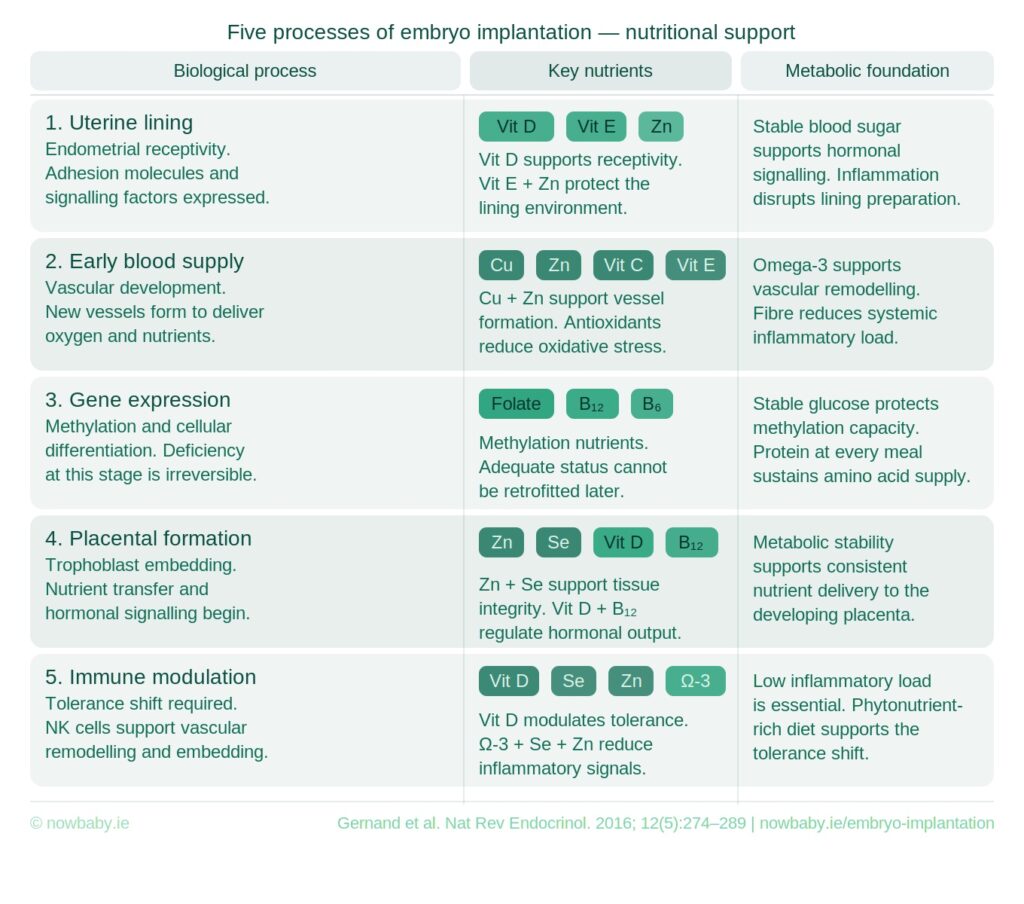
Progesterone supports the uterine lining for this process. Targeted nutrition supports the implantation needs progesterone does not cover.
Implantation is biologically active. It depends on tissue readiness, blood flow, inflammatory balance, immune communication, cellular energy, micronutrient availability and early placental development.
The Now Baby FET Implantation Support meal plan takes all the guesswork and macro counting out of it for you.
Starting the day after transfer, it gives you a clear nutrition structure for the implantation window; targeted nutrients and meals designed to support the nutritional demands of implantation.
Your clinic manages the progesterone protocol. The Now Baby FET Implantation Support meal plan gives you the nutrition structure progesterone cannot provide: balanced macros, steady nourishment and clear daily meals from the day after transfer through the two-week wait.

You didn’t come this far to wing it.