When you are over 40 and trying to grow your family, your age is often given as the reason your risk of a chromosome abnormality is higher.
That explanation stops at the number, as though the number itself decided the outcome. It does not.
Chromosome abnormality is a result of biology, not age, and this biology runs on energy. Each egg contains roughly 100,000 mitochondria — the highest number of mitochondria found in any cell type in the human body, providing the massive energy supply required for fertilisation and early embryonic growth. Every egg preparing to ovulate depends on its own mitochondria to separate its chromosomes correctly. Over 40 is when that energy system comes under more strain.
Your internal energy system decides if life is possible now, before conception, inside the egg that is maturing this cycle.
See how you can support this process now.

The Machinery That Separates Your Chromosomes
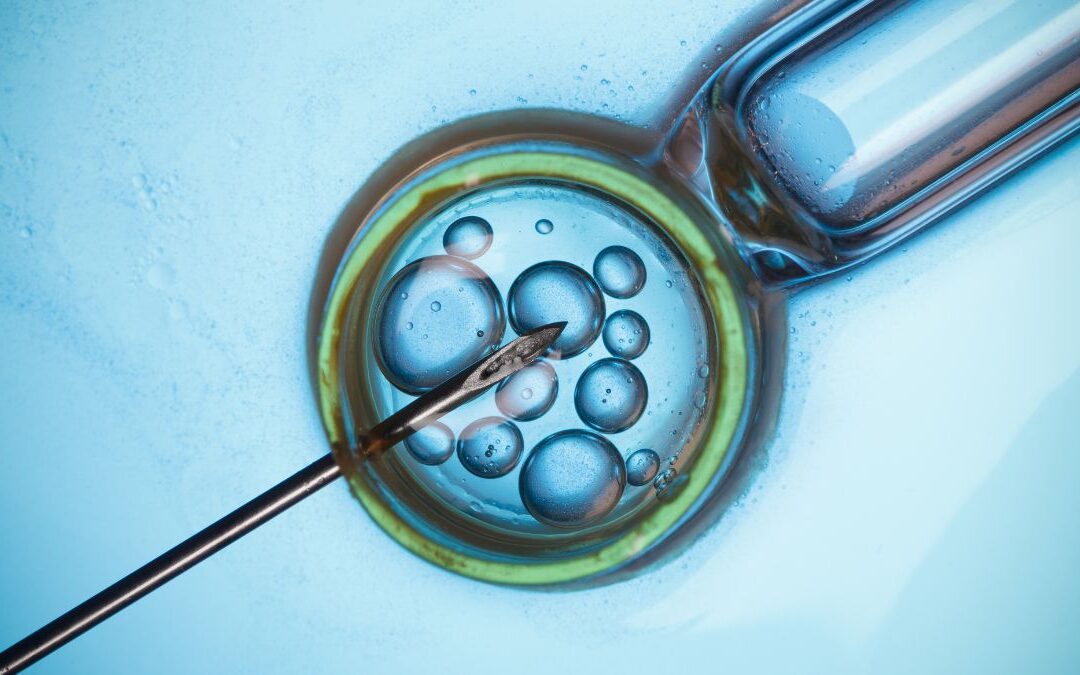
An egg begins with paired chromosomes and has to divide them precisely in half during the final stage of maturation, ending up with exactly one copy of each — a division process called meiosis. Meiosis depends on a structure called the meiotic spindle, whose job is to attach to every chromosome and pull the pair apart cleanly, sending one copy to the egg and discarding the other. When an attachment fails, a chromosome can end up on the wrong side of that divide, leaving the egg with one too many or one too few — an error called nondisjunction.
The spindle itself is built fresh each cycle, but the mitochondria powering it originated before you were born and carry accumulated wear from decades of energy production. That accumulated wear is what makes them less able to keep pace with repair as you move through your 40s, producing energy less reliably and leaving the spindle’s attachments to chromosomes more error-prone as a result — which is why the proportion of eggs carrying the wrong number of chromosomes rises across this decade.
The Energy an Egg Needs Before It Can Mature
Separation work runs entirely on fuel. An egg preparing to ovulate has to complete meiosis. Chromosome alignment, spindle assembly, the physical division of the cell — every stage runs on energy made by the mitochondria inside the egg, since egg and early embryo development depends directly on the energy mitochondria produce. That production is not constant. Live measurements of maturing mammal eggs show energy output surges at specific points tied to the stages of division. The mitochondria supplying it have to be working reliably at exactly the moments the egg needs them most.
Producing that energy also takes fuel from outside the egg. The surrounding follicle — the fluid-filled structure the egg develops inside — supplies glucose, fats and amino acids, which the mitochondria inside the egg convert into usable fuel. That conversion depends on B-vitamins too, found in wholegrains, eggs and leafy greens. A body running on inconsistent fuel — skipping breakfast, going five or six hours without eating, replacing meals with coffee — is asking the follicle to build that supply out of an unpredictable delivery. An unpredictable supply doesn’t give the mitochondria what they need at the exact moments division requires it, which is what makes the spindle’s attachments more error-prone in the first place. That inconsistency may repeat cycle after cycle, for the 90 days before ovulation.
Mitochondria at the Moment of Fertilisation
Energy demand continues past ovulation, into fertilisation itself. When a sperm reaches the egg, fertilisation triggers a rise in calcium inside it, and that calcium signal is what activates the egg and drives the energy demand of completing the final stage of division. The same mitochondria that powered maturation are now doing a second job — supplying the surge of energy that response requires.
Mitochondria also do quality-control work at this stage, clearing damaged components and maintaining the membrane function energy production depends on. An egg arriving at fertilisation with an already-strained energy supply is asking a system under pressure to do this work too.
What This Means for Your Embryo’s First Days
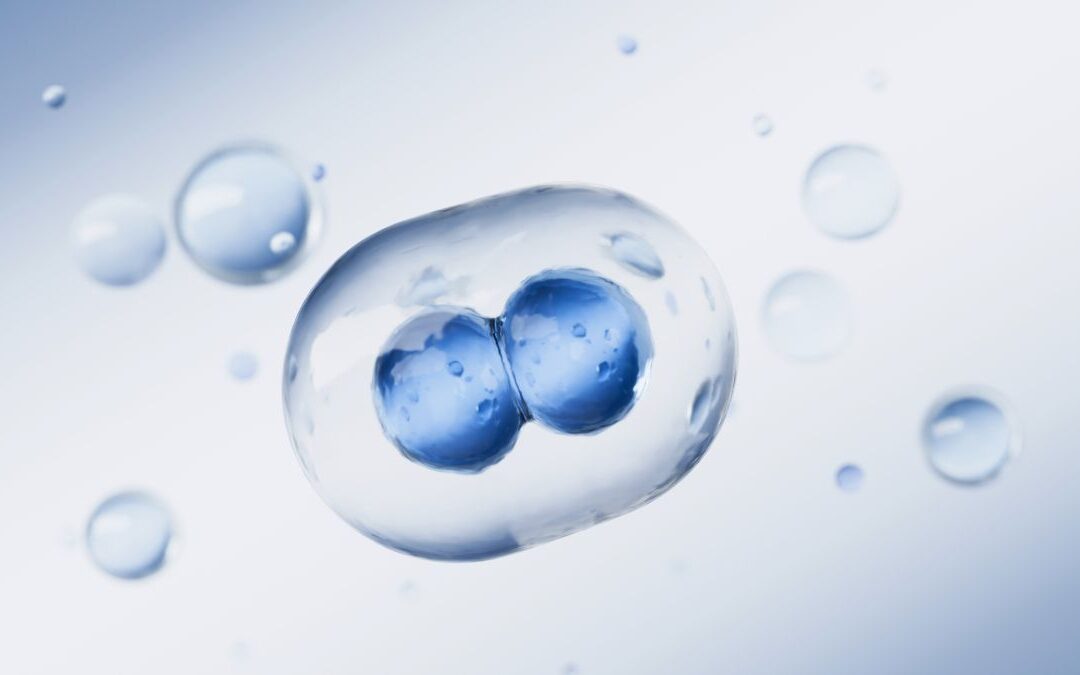
Whatever energy reserve the egg carried into fertilisation is what the embryo has to work with through these earliest divisions. A shortfall here can stop a division entirely.
These first divisions also depend on specific nutrients, not just energy. Folate, and vitamins B6 and B12, support the epigenetic processes already active at this stage — the chemical tagging that switches genes on and off as the embryo’s own genome takes over, with folate found in leafy greens, legumes and liver, B12 in animal foods such as meat, fish, eggs and dairy, and B6 in poultry, fish and potatoes. That work is underway before you would ever know a pregnancy exists.
Sperm Depend on the Same Energy System
Sperm mitochondria provide the energy for movement and for the changes a sperm must complete before it can fertilise an egg. Mitochondrial function is also connected with sperm motility and the integrity of the DNA it carries.
A standard semen analysis checks count, movement and shape. It does not show whether the DNA inside the sperm has been fragmented by oxidative stress during development. Higher sperm DNA fragmentation is linked with a lower chance of pregnancy and a higher risk of miscarriage after IVF or ICSI.
Sperm cannot complete most DNA repair for itself. After fertilisation, it relies partly on repair machinery supplied by the egg, and that capacity becomes less effective with maternal age. The egg developing after 40 may therefore reach fertilisation carrying its own energy demands and DNA repair work created by the sperm.
His preparation matters before that point. Dietary patterns built around fish, poultry, whole grains, vegetables and fruit are associated with better semen quality, while diets higher in processed meat, saturated and trans fats, sugary drinks and sweets are associated with poorer semen quality.
This is why fertility preparation over 40 belongs to both partners. Supporting sperm development before conception reduces the avoidable burden carried into fertilisation instead of leaving the egg to manage both sides of the process.
Why One Supplement Can’t Do This Job
CoQ10 supports one part of the mitochondrial energy chain. NAD+ supports enzymes involved in energy metabolism and cellular repair. NAC supports the antioxidant system that protects mitochondria from the oxidative damage energy production itself generates. Each plays a real, specific role — but none of them creates the steady fuel supply that egg and sperm development actually run on.
What determines whether an egg or a sperm cell has the energy this process demands is partly whether meals across the day reliably deliver that fuel, over the 90 day development window — not which supplement gets added. Gaps in that supply can add another constraint during maturation, fertilisation and the embryo’s earliest divisions — stages that already depend on tightly coordinated cellular processes.
Put Your Biology Ahead of Your Age
Your fertility success depends on chromosome separation, energy production and DNA repair capacity.
Your age was never the defining factor — your biology is.
That biology is actively maturing your next egg. The Now Baby Over 40 Fertility Nutrition Protocol coordinates the energy, protein, fats and micronutrients this development window draws on across the full 90 days.

.