When you are trying to have a baby, the outcome that matters is not ovulation, embryo grading, or a positive test — it is a live birth.
Live birth outcomes depend on key biological conditions established long before conception, including oxidative balance, mitochondrial energy production, methylation capacity and sustained micronutrient availability.
The importance of the Mediterranean diet for fertility comes from how closely this way of eating aligns with the physiological requirements for fertilisation, implantation, early embryo development and pregnancy stability. It brings the nutritional inputs for these connected processes together within one complete fertility-nutrition strategy.
What the Research Shows About Mediterranean Eating and Fertility
Closer adherence to Mediterranean eating has been linked with the outcomes couples care about, from conception through to live birth.
Among Spanish university graduates aged 20–45, women with the closest adherence to a Mediterranean-style diet had 44% lower odds of reporting difficulty conceiving than women with the lowest adherence.
The live-birth difference was also substantial among non-obese women under 35 having their first IVF treatment. Live birth occurred in 48.8% of those with the highest Mediterranean-diet adherence, compared with 26.6% of those with the lowest adherence.
Male-factor fertility depends on sperm being produced in sufficient numbers and able to move effectively. Closer Mediterranean-diet adherence has been positively associated with semen quality, including sperm concentration and motility.
A fertility-nutrition strategy for a couple must therefore include the nutritional demands of sperm production alongside those of egg development, fertilisation and implantation. Mediterranean eating provides that shared strategy by bringing the required nutritional inputs together for both partners.
How Mediterranean Eating Meets Fertility’s Nutritional Demands
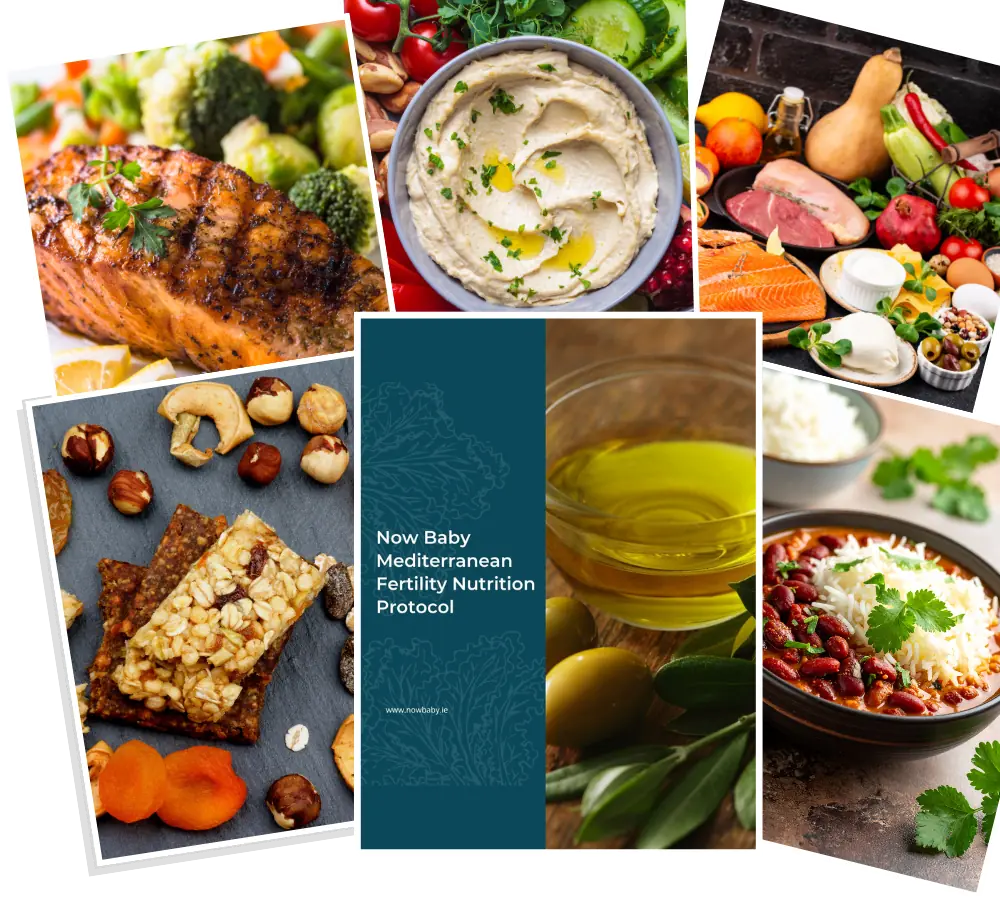
The Mediterranean diet includes vegetables, pulses, whole grains, fruit, nuts, seeds, olive oil and fish. Together, these foods provide a broad range of nutrients involved in reproductive function.
Cellular energy production depends on micronutrients that allow enzymes to work. Building cell membranes requires an appropriate supply of fats, while protein provides amino acids used to make enzymes, hormones, transport proteins and new tissue. Folate works with other B vitamins within one-carbon metabolism, including the processes involved in DNA synthesis and methylation.
Mediterranean eating brings food sources of these inputs into the same daily structure. The same meal can contribute micronutrients used in energy production, fats and proteins needed for cellular structures, and plant compounds involved in maintaining oxidative balance. Repeating this balance across meals provides broad nutritional coverage throughout fertility preparation.
The foods are familiar. Their combined contribution provides the nutritional breadth required during fertility preparation.
The Nutritional Demands Behind Egg, Sperm and Implantation
An egg develops within its follicle before ovulation. During that development, the egg and the cells surrounding it use energy, produce hormones and exchange nutrients. Sperm must be produced, mature and retain the membrane function and DNA integrity needed for fertilisation. Both processes are active long before egg and sperm meet.
After fertilisation, the biological work continues. The fertilised egg begins dividing while the endometrium has prepared for implantation. New cells require energy, cell membranes and the controlled use of genetic instructions. Mitochondria supply energy for this work, while methylation and DNA synthesis depend on reactions that use folate and other micronutrients.
Reactive oxygen species are produced during normal cellular activity. Antioxidant systems keep them within a range compatible with cell function, making oxidative balance important for sperm, eggs and the earliest stages of development.
Nutrition is therefore part of reproduction itself. It supplies materials and cofactors used while reproductive cells are developing, fertilisation is taking place and the endometrium is preparing to receive an embryo. Human fertility evidence connects healthier ways of eating that favour seafood, whole grains, fruit and vegetables with female fertility and semen quality in men.
Mediterranean eating provides a coherent method of supplying the nutritional breadth those connected processes require.
Consistency Matters More Than a Perfect Meal
Closer Mediterranean adherence describes the way someone eats repeatedly. Repeated nutritional exposure is how the overall way of eating supplies its combined inputs during fertility preparation.
The reason is biological. Follicular development continues before ovulation, sperm production and maturation continue before conception, and the endometrium prepares during the menstrual cycle. These processes follow different timescales, but all require nutritional inputs while the work is taking place.
Consistency allows protein, fats, vitamins, minerals and other food components to remain part of the environment in which that development is happening. It does not require a rigid menu. The breadth of Mediterranean food allows the structure to remain consistent while individual meals, ingredients and flavours change.
A 90-day approach gives both partners a defined period in which to follow the fertility-nutrition strategy. Its value comes from sustained implementation during fertility preparation, while reproductive processes continue on their own timescales.
Why Knowing What to Eat Still Doesn’t Make Dinner Easier
Knowing why Mediterranean eating matters still leaves tonight’s dinner undecided. The weekly shop, tomorrow’s lunch and the food needed on a demanding day all require planning and preparation.
Eating this way consistently requires those practical tasks to be resolved. At the point when food is needed, you still need to know which meal to make, whether the ingredients are available, how long preparation will take and what will be ready for the following day.
Nutrition information alone does not decide the meals, buy the ingredients or prepare the food. The next step is to reduce repeated decisions and preparation without losing the structure of the Mediterranean approach.
Less Time Deciding, Shopping and Cooking
One of the biggest challenges with changing eating habits is knowing where to start.
Over my 23 years of working with couples who are trying to conceive, I have found that planning and preparing meals are among the most useful skills for putting nutrition advice into practice. The benefits are concrete.
- You do not have to think about what is for dinner tonight when it was planned last weekend.
- All the shopping for the week can be done at one time, saving hours.
- Preparing food in one go saves repeating the same work throughout the week.
- Meals that can be frozen for another day or used for lunch the next day mean less time in the kitchen.
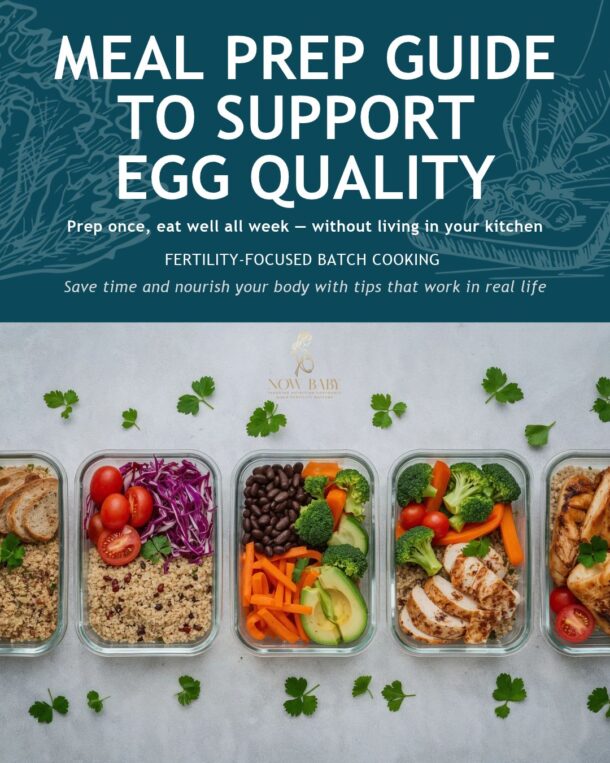
The Meal Prep Guide gives you a practical starting point for making those changes and reducing the daily planning and preparation burden.
From Marseille to Marrakesh
Picture the colour and variety of Mediterranean food: vegetables dressed with olive oil, fish and seafood, pulses, whole grains, nuts, seeds, herbs and fruit. That variety makes this way of eating enjoyable enough to sustain throughout fertility preparation.
The Now Baby 90-day Mediterranean Fertility Nutrition Protocol organises those foods around the nutritional requirements of egg and sperm development, fertilisation and implantation. The meals, quantities and nutritional coverage are mapped for both partners, removing the work of trying to assemble a complete fertility strategy yourself.
You can see what to eat each day, prepare meals that work together and know that the nutritional requirements of both partners have been accounted for across the full 90 days.
This is the abundance of the Mediterranean diet targeted towards making your baby — from Marseille to Marrakesh, with your complete fertility nutrition strategy already mapped out.